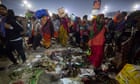
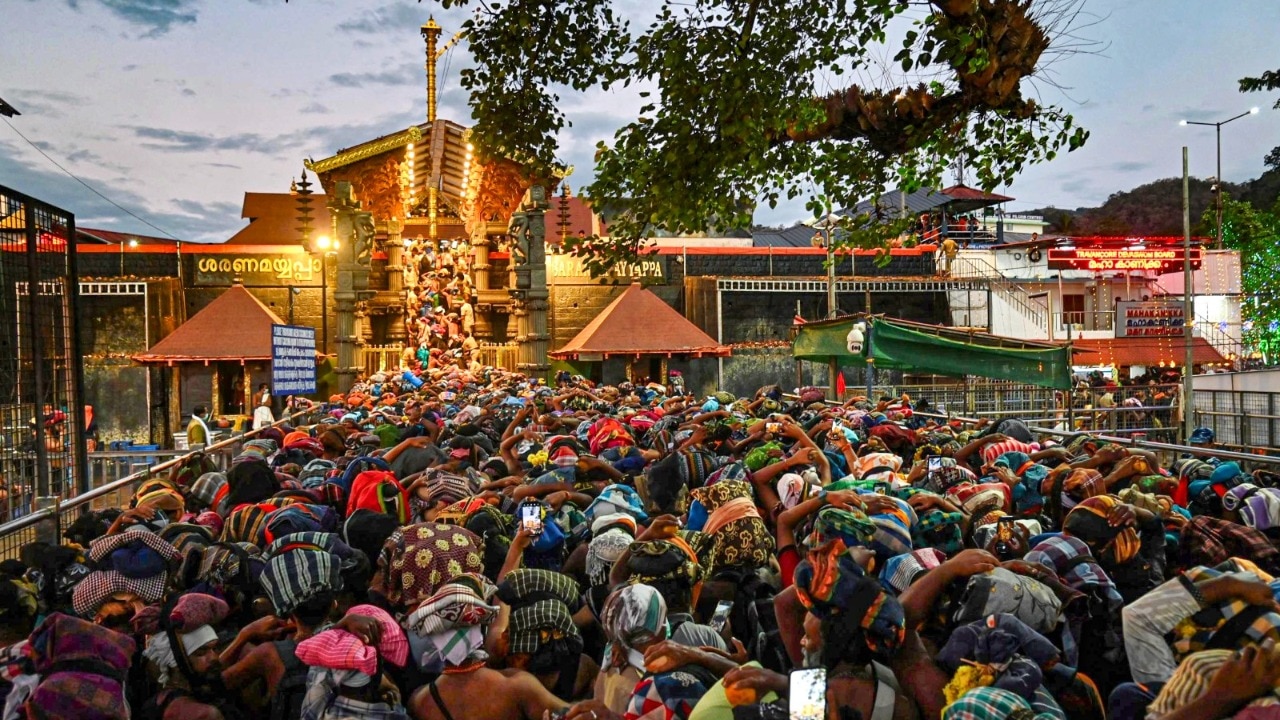
As the sun set on the sangam, the sacred meeting point of the Ganges and Yamuna rivers on Tuesday, there was a mood of jubilation on the banks. This was the eve of one of the holiest days of the Kumbh Mela festival – the largest religious gathering not only in India but the world – and millions upon millions had made long, often arduous journeys to immerse themselves in the water.“It seems like the entire country has come to the sangam to bathe,” exclaimed Rubi Kumar, 43, sandwiched tightly with fellow devotees on the riverbank. She had taken a 36-hour train from her home state of Bihar, and then walked 25 miles to reach this spot. Still dripping wet from her first holy dip, she beamed widely as she tied up her soft pink sari.“It was such a struggle to get here but now it feels like all the pain and agony has gone,” said Kumar. “It’s one of the most beautiful days of my life.” She planned to take one more dip at about 3am the next morning – the most auspicious time, on Wednesday – and then head hundreds of miles back home.The potent belief among the Hindu devotees gathering that evening was that to be cleansed in the sangam waters over the next few hours – a period known as Mauni Amavasya, marking a new moon – was to free their body of past sins and relinquish the endless cycle of birth and death. Some wept as they entered the freezing river, while others shouted out in euphoria or whispered prayers as they scattered flowers and poured cups of milk into the holy waters.The Kumbh Mela comes round just once every 12 years in the Uttar Pradesh city of Prayagraj, but this year was deemed particularly special as it was the “Maha” or great Kumbh Mela, marking the 12th in a row, which comes just once every 144 years amid a special alignment of the sun, moon, Jupiter and Saturn. By the government’s own projections, 400 million people are expected to attend by the time it finishes in February, the largest crowd in its history.It had taken 45-year-old Vipul Rajgor and six members of his family 14 hours to drive through the night from Gujarat to be here, but he was nothing short of overwhelmed at the experience. “To be alive and here for this day is the greatest gift of my life,” said Rajor.Nearby, families sat spread out in a colourful mass across the ground, passing around rotis and chai, and birds swooped over the small fishing boats taking devotees out for a gentle evening river ride. Gayatri Devi Kushwa, 30, said the sacred water was icy cold as she dipped in with her five-year-old son, Deepanshu, “but it felt incredibly peaceful. I never wanted to get out.”Yet within just a few hours, these joyous scenes would turn into a deadly human crush. As darkness fell over the vast makeshift camp on Tuesday evening, more and more devotees poured into the festival site to bathe at the sangam during Mauni Amavasya. People squashed into the square kilometre of land known as the “sangam nose”, trying to reach the riverban
How joy turned to horror as Kumbh Mela festival crowd crush unfolded