Bitcoin Magazine
How the Iran War is Repricing Bitcoin
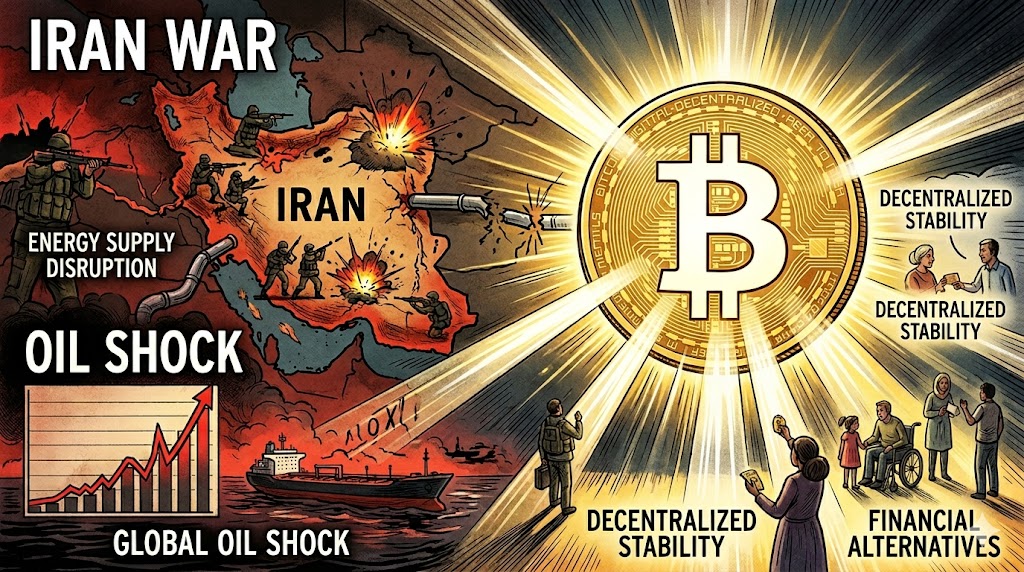
Since the U.S. and Israel began striking Iran on February 28, 2026, markets have had to wrestle with the financial and economic implications. The IEA described the disruption through Hormuz as the largest supply shock in the history of the global oil market. The strait normally carries about a quarter of maritime oil trade and is involved in about a fifth of global petroleum liquids consumption.
The Iran war has made monetary infrastructure visible again
The Strait of Hormuz is obviously a physical chokepoint. However, trade also depends on a monetary chokepoint. Cross-border payments usually move through correspondent banks, intermediary banks, screening layers, and trade-finance channels. Correspondent banking is an essential part of the global payment system for cross-border transactions, which involve a chain of linked correspondent banks. When that chain is stressed, settlement risk rises alongside freight and energy risk.
That is what this war has forced markets to confront. Reuters reported on April 9 that ship traffic through Hormuz was running at well below 10% of normal volumes, with just seven ships crossing in the prior 24 hours against roughly 140 normally. Iran’s posture around routing, permissions, and possible tolls made clear that access has become conditional.
Once trade access becomes conditional in the physical corridor, the other lever to pull is the monetary one. Here’s some important context.
OFAC prohibits U.S. banks from operating correspondent accounts for Iranian banks. In August 2025, the U.S. Treasury sanctioned the developer of Iran’s Cross-Border Interbank Messaging System, saying it had been built to let Iran and its partners route around controls on more widely used payment systems and to facilitate ties with foreign banks, including links involving Bank of Kunlun.
With the Iran war disrupting a major segment of global trade, it is practically inevitable that U.S. dollar rails will be used to try and force a resolution. If Iran wants money in exchange for Strait access, then it will need something else for monetary settlements.
Bitcoin really shines here
Bitcoin is an open settlement network. It does not require a correspondent bank, a reserve-currency issuer, or a central payments operator to authorize transfers. Although this does not remove friction from sanctions law, price volatility, or custody, Bitcoin nevertheless has a very different institutional dependency profile—one that could become extremely meaningful and useful in this context.
Consider that:
A kinetic conflict can freeze cargo and supply lines.
A banking crisis can freeze the payment for those items.
A sanctions regime can force transactions into narrower channels with more intermediaries and more approval points.
Yet Bitcoin remains an open monetary rail.
On March 3, researchers tracked millions of dollars worth of