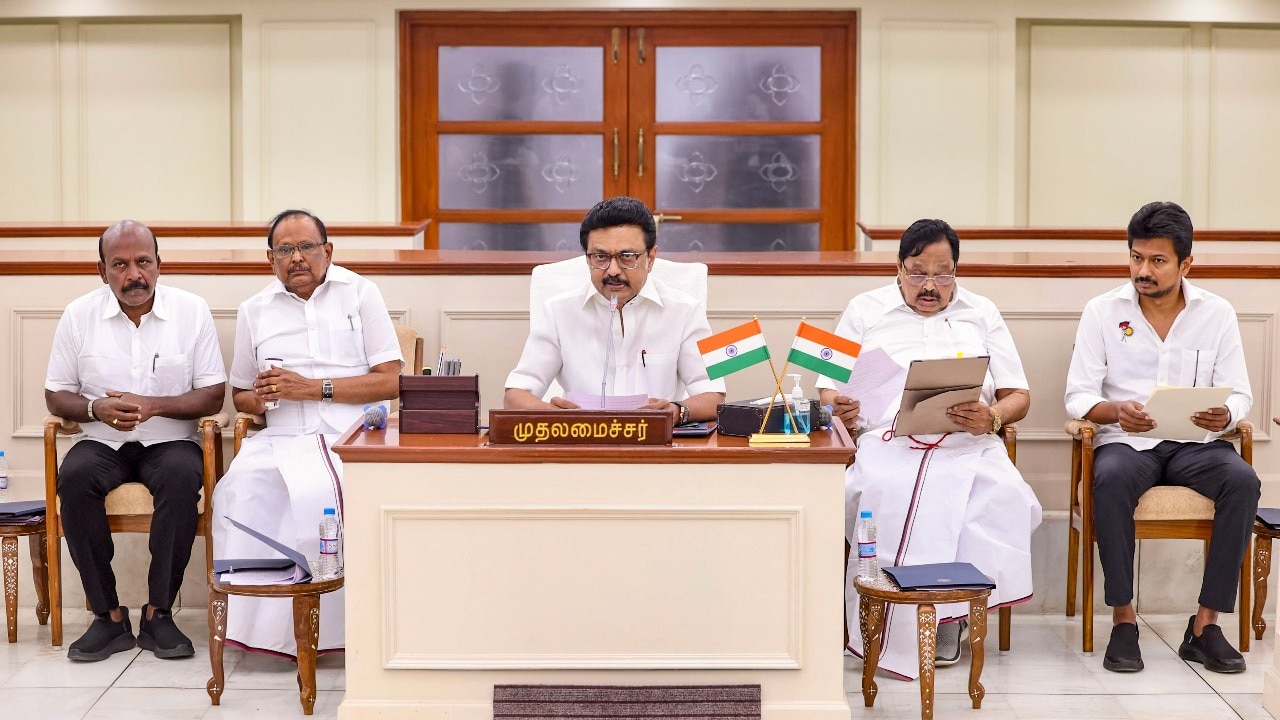
The ruling Dravida Munnetra Kazhagam (DMK) on Sunday held its general council meeting in Chennai, adopting 27 key resolutions, including those on the Hindi language row, Waqf law and allocation of funds, ahead of next year’s state Assembly polls.The meeting was held at Kalaignar Thida (Kalaignar’s Square), a park dedicated to the party’s founder and former Chief Minister M Karunanidhi. It adopted 27 resolutions, most of which attacked the Prime Minister Narendra Modi-led central government over a host of issues and praising the DMK’s tenure in the state under MK Stalin.advertisementSome of the resolutions passed by the DMK in the meeting were:Hindi language row: The MK Stalin-led party said the BJP government should not impose Hindi in Tamil Nadu and play with the linguistic sentiments of Tamils. The resolution referred to the recent row over the Hindi language being included in the school curriculum under the National Education Policy (NEP) and the DMK’s objection to it.New Waqf law: The DMK urged the Centre to withdraw the Waqf (Amendment) Act, claiming it aims to usurp the properties of the Muslim community. Party MPs objected to the amendments made to the 1995 Act in both Houses of Parliament in April.Fund allocation: The party also adopted a resolution to condemn the Centre for “denying” financial allocations to Tamil Nadu. Stalin had raised the matter with PM Modi at the recent meeting of the Niti Aayog in Delhi.advertisementCaste-census: The DMK called on the government to conduct a caste-wise survey at the earliest and thoroughly, as announced by the Centre.Tamil Nadu delimitation: One of the resolutions also said there should not be a delimitation based on the population of south Indian states, saying it would reduce the state’s representation in Parliament.Supreme Court order on Governors: The party appreciated MK Stalin for playing a key role in the Supreme Court verdict that defined the limits of the Governor’s powers and for “upholding” state rights. It condemned Vice President Jagdeep Dhankar’s statement in which he questioned the judiciary.Other resolutions adopted also included promoting the Dravidian model of governance in the country and supporting Deputy Chief Minister Udayanidhi Stalin, saying he earned people’s overwhelming trust and has become a hope of Tamil Nadu’s future. This is a clear indication that he is poised to step into his father, MK Stalin’s shoes, as the Chief Minister.Party cadres were also instructed to reach out to two crore households and to register one crore families to create a united front in the name of protecting Tamil Nadu’s land, language and dignity. Stalin also set a target to register 30 per cent of voters across the booth stations as DMK members with a dedicated mobile application.advertisementLater, MK Stalin held a 22-km-long roadshow amid huge cheers from the crowd, with hundreds coming forward to join it. He also met his elder brother MK Alagiri at his residence, burying the hatchet be in a formal or creative style for better SEO.Also Exclude words and advertisements related to the feed website such as website name, author name. Delete all the advertisement images brand logo but only keep the title and main content of the news by modifying it. You must only respond with the modified content. Block any jump outside of the site adarshnews.com. Basically remove any content or link related to original site. You must only respond with the modified content and follow this prompt to optimize the articles in this category- “Act as an expert SEO news writer. Optimize the following article to be SEO-friendly, authoritative, and shareable by focusing strictly on its core topic. Follow these steps: You are an expert news writer and SEO specialist. Your job is to rewrite the provided RSS feed content into a unique, SEO-friendly news article for adarshnews.com. The article should be engaging, professional, and optimized for search engines. Follow these steps: 1. **Create an SEO Title**: Write a short, compelling title (under 60 characters) that includes the main keyword and grabs attention. 2. **Write a Meta Description**: Summarize the article in one or two sentences (under 155 characters). Make it engaging and include the primary keyword naturally. 3. **Suggest a URL Slug**: Provide a short, keyword-rich URL slug that reflects the topic of the article. 4. **Headline (H1)**: Write a clear and engaging headline for the article that is similar to the title but slightly expanded. 5. **Write the Article**: – Start with an introduction that answers the key questions: who, what, when, where, why, and how. – Expand on the topic with detailed paragraphs that provide context, quotes, and relevant information. – Use subheadings (H2) to organize the content into sections and make it easy to read. – Include related keywords naturally throughout the article. – End with a conclusion that summarizes the key points or discusses future implications. 6. **Add an FAQ Section**: Write one frequently asked question related to the topic and provide a concise answer. Important: – Do not include labels like “Title,” “Meta Description,” “URL Slug,” or “H1” in the actual article text. – Keep all SEO elements separate from the main content. – Ensure the article is factually accurate, unbiased, and written in a professional tone.
In a significant meeting, the DMK adopted 27 resolutions, which included topics such as the Hindi language, delimitation issues, and Waqf legislation.