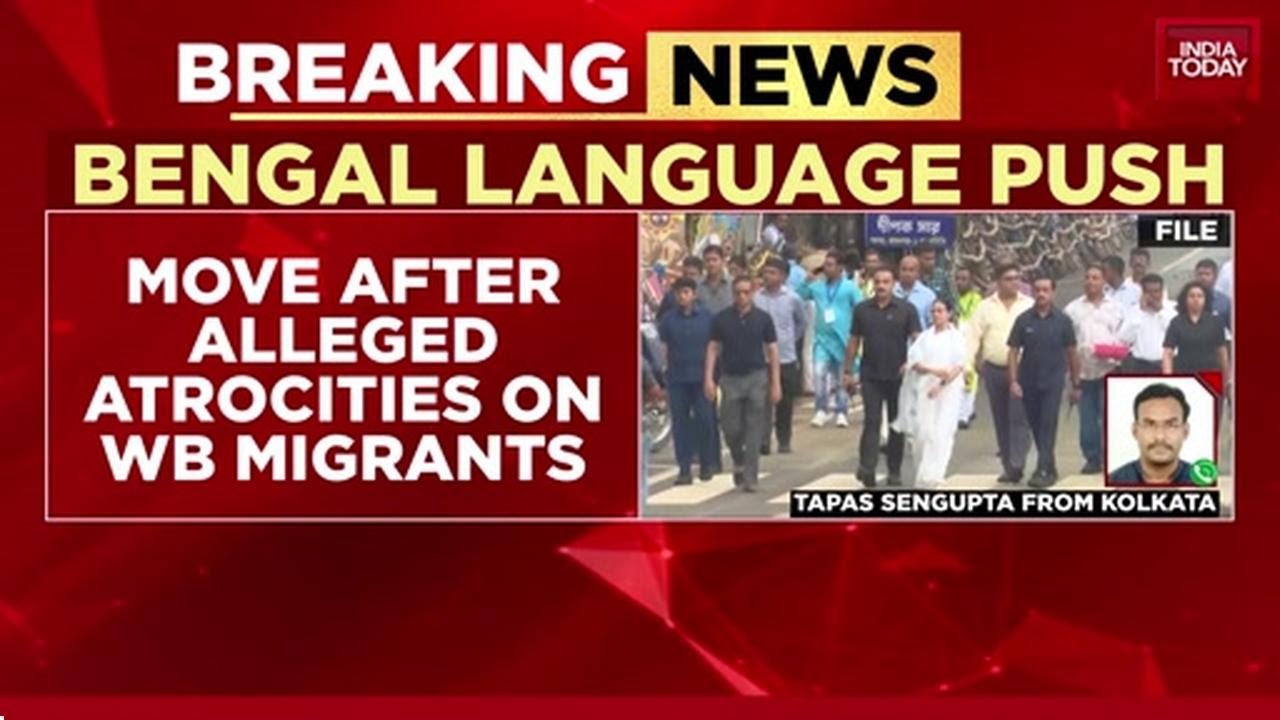
**Kolkata’s Signboard Politics: The Bengali Language Mandate Sparks TMC-BJP Conflict**
In Kolkata, the ongoing political rivalry between the Trinamool Congress (TMC) and the Bharatiya Janata Party (BJP) has intensified, particularly surrounding the issue of signboards in the Bengali language. This conflict has emerged as a significant point of contention, reflecting broader cultural and political dynamics in West Bengal.
The TMC, led by Chief Minister Mamata Banerjee, has been a staunch advocate for the promotion of the Bengali language, emphasizing its importance in preserving the region’s cultural identity. In contrast, the BJP has positioned itself as a proponent of Hindi and other languages, aiming to appeal to a wider national audience. This divergence has led to heated debates and accusations from both sides, with each party accusing the other of undermining the linguistic heritage of Bengal.
The controversy gained momentum when the TMC government mandated that all signboards in the state must be displayed in Bengali, a move that the BJP has criticized as an attempt to impose regionalism and stifle diversity. Supporters of the TMC argue that this policy is essential for fostering local pride and ensuring that the Bengali language remains vibrant in public life.
As the political landscape evolves, the implications of this language mandate extend beyond mere signage. It raises questions about identity, governance, and the role of language in shaping political narratives. The TMC’s push for Bengali signboards is seen as a strategic move to consolidate its voter base, while the BJP’s opposition reflects its broader agenda to challenge regional parties in West Bengal.
In conclusion, the signboard politics in Kolkata encapsulate a larger struggle over cultural identity and political power in West Bengal. As both parties continue to navigate this contentious issue, the outcome will likely influence the region’s political future and the ongoing discourse surrounding language and identity.
**FAQ**
**Q: Why is the Bengali language mandate significant in Kolkata’s politics?**
A: The Bengali language mandate is significant as it highlights the cultural identity of West Bengal and reflects the ongoing political rivalry between the TMC and BJP, impacting voter sentiments and regional pride.