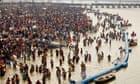
At least 30 people have been killed and 60 injured after fatal crowd crushes took place at the Kumbh Mela festival in India. The incident took place on early Wednesday morning as large numbers of devotees went to bathe in the river, on one of the holiest days of the Hindu gathering.What is the Kumbh Mela?The Kumbh Mela is the world’s largest religious gathering, widely seen as the “festival of festivals” in the Hindu religious calendar. This year it is being held in the north Indian city of Prayagraj, where it takes place every 12 years.Its origins lie in ancient Hindu mythology and the legend of demons and gods fighting over a pitcher, or kumbh, of the nectar of immortality, and drops falling on to the earth in four Indian cities.During the 45-day festival, Hindu holy men, known as sadhus, and hundreds of millions of devotees set up camp and take a dip in the triveni sangam, the sacred confluence of the Ganges, Yamuna and mythical Saraswati rivers in Prayagraj, which they believe will cleanse their sins and free them from the cycle of reincarnation.Smaller versions of the Kumbh Mela take place every three years but the iteration held in Prayagraj is considered to be the biggest and most spiritually significant. This year’s celebration, which is expected to continue until 26 February, is particularly auspicious as it is the Maha, or grand Kumbh Mela, which takes places once every 144 years. It marks the 12th Kumbh Mela at Prayagraj and a special celestial alignment of the sun, the moon, Jupiter and Saturn.Just how big is the Kumbh Mela?Even in a country as big and populous as India, the scale of the Kumbh Mela is staggering. This time round, the government said it expected 400 million visitors – larger than the population of the US – to turn up over the total 45 days of the Kumbh Mela, which would be a record crowd for the festival. In 2019, a smaller version of the festival in Haridwar attracted 240 million people.Over the course of the festival, a sprawling temporary city of tents, stalls, toilets and elaborate temple facades are constructed along both banks of the Ganges, across a 40 sq km area. Each day, millions gather at the triveni sangam to take a dip in the water, many having travelled for days to do so.As well as pilgrims, it is mandatory for tens of thousands of sadhus, who are part of monastic sects known as Akharas, to attend the Kumbh Mela and take part in several ritual bathes in the river. It offers pilgrims a rare opportunity to offer devotion to the naga sadhus, the naked, ash-smeared holy men who largely live an isolated life of meditation and prayer in ashrams.Spending for the festival has also increased to record highs this year, with the Uttar Pradesh state government reported to have spent 70bn rupees (£670m) on setting up the site and bringing in new technology to update the ancient festivities.What caused the crowd crush?Wednesday 29 January was considered one of the most auspicious days to take a dip in the
Kumbh Mela: what is the Hindu ‘festival of festivals’?