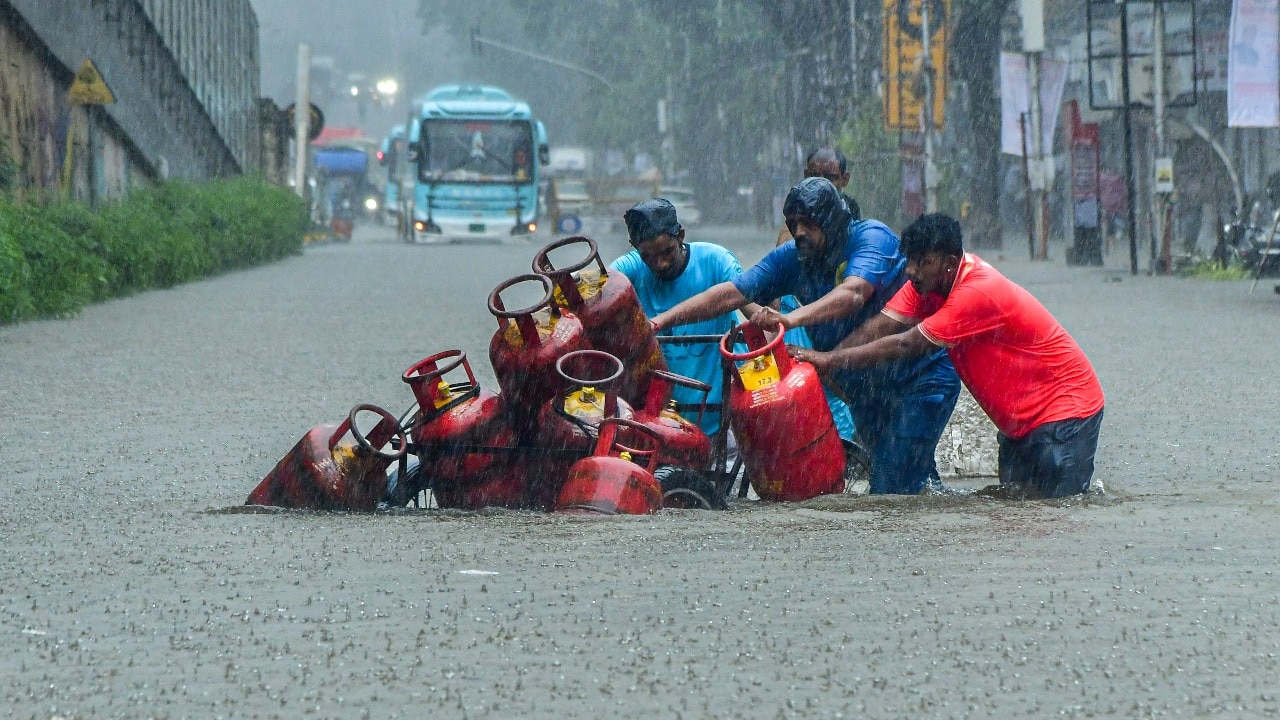
**Mumbai Faces Intense Rainfall: A Deep Dive into Recent Weather Patterns**
Heavy rainfall has gripped Mumbai over the past few days, particularly from August 16 to 19, primarily due to a combination of weather systems that are intensifying the ongoing southwest monsoon.
**Moisture-Laden Weather Systems**
The recent deluge has been fueled by a low-pressure area situated over the Bay of Bengal, in conjunction with an east-west trough over the Arabian Sea. These atmospheric conditions have significantly increased moisture influx from both systems, resulting in prolonged and heavy precipitation across the region, with Mumbai being particularly affected.
The financial capital has experienced “extremely heavy” rainfall, with some areas recording over 200 mm in just 24 hours. As a result, all schools, colleges, and government offices were closed on Tuesday, bringing the city to a standstill.
**Understanding the Unusual Rainfall**
Unlike typical monsoon showers, which tend to be sporadic, the continuous rainfall in this instance is attributed to the stationary nature of the trough. This static system allows moisture-laden winds to maintain cloud formation over the area for several days.
August is historically Mumbai’s second-wettest month, averaging around 560-620 mm of rainfall, often accompanied by thunderstorms due to the active phase of the monsoon. However, the current weather pattern is exceptional, having commenced on the evening of August 15 and continuing unabated. In just over 80 hours, the city has accumulated 550 mm of rain, nearly equivalent to a full month’s worth of precipitation.
**Climate Change and Its Implications**
Mumbai has experienced similar weather events in the past, such as the catastrophic floods of 2005, which saw 944 mm of rain in a single day. However, the current situation is notable for its multi-day persistence rather than a singular extreme event. Climate experts often associate such intensified weather patterns with warming oceans, which increase the atmosphere’s moisture capacity. Nonetheless, establishing a direct link to climate change requires comprehensive long-term data analysis beyond this isolated incident.
In conclusion, the recent heavy rainfall in Mumbai underscores the complexities of weather systems and their potential links to climate change. As the city grapples with these challenges, understanding the underlying factors becomes crucial for future preparedness.
**FAQ**
**Q: What caused the recent heavy rainfall in Mumbai?**
A: The heavy rainfall was primarily caused by a low-pressure area over the Bay of Bengal and an east-west trough over the Arabian Sea, which enhanced moisture influx and led to prolonged precipitation.