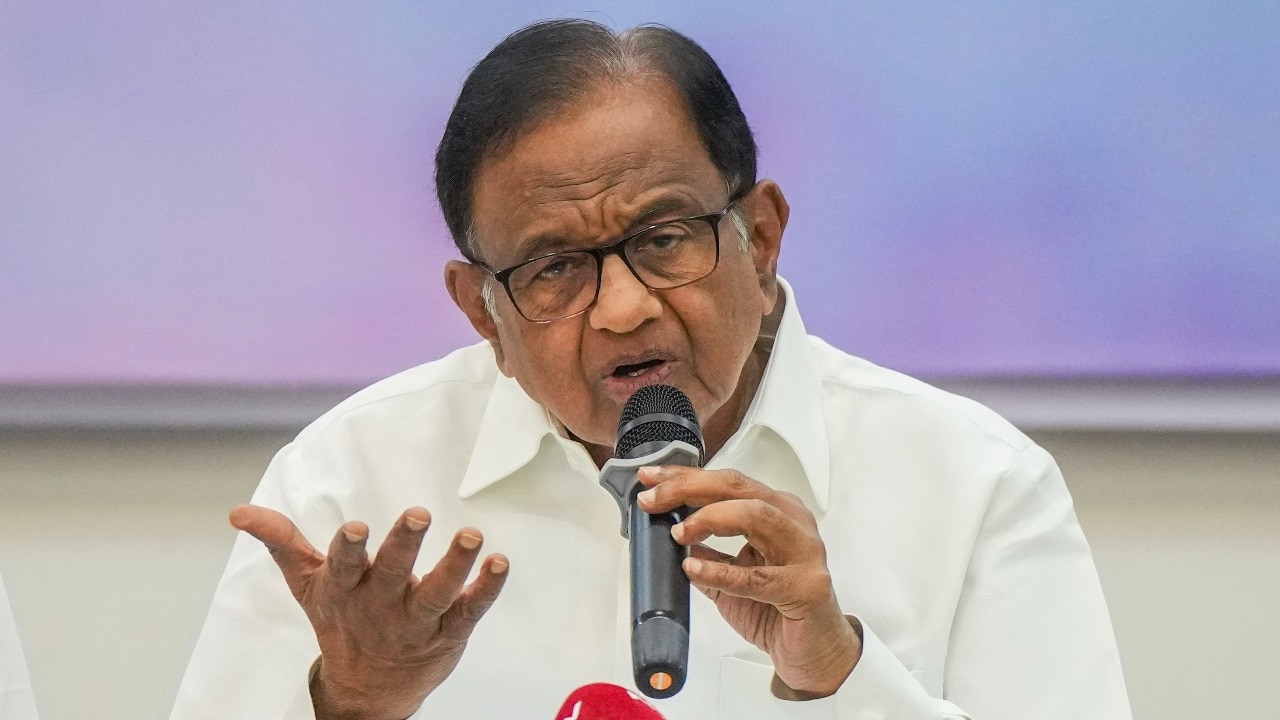
A day after Finance Minister Nirmala Sitharaman unveiled the biggest revamp of the Goods and Services Tax (GST) since its rollout in 2017, former finance minister P Chidambaram welcomed the move but cautioned that the reforms alone will not be enough to revive the economy.“Nirmala Sitharaman has agreed with the Congress that it should be a good and simple tax. We have been saying this for eight years — GST means a good and simple tax. She has come around to the view. I am glad she agrees with us,” Chidambaram said in an interview with India Today TV.advertisementThe former minister described the two-slab structure announced on Wednesday as a “necessary step, but not a sufficient step.” While the new rates could partly offset weak consumption and cushion the impact of tariffs linked to Donald Trump’s trade policies, he argued that deeper changes were required.“It will largely offset the low rate of consumption, it will partially offset Trump’s tariffs, but there are several other things that have to be taken to boost consumption and to counteract Trump’s tariffs. This is a good step, this is the first step, but this is not a sufficient step,” he said.Chidambaram stressed that the government must now focus on simplifying the GST laws themselves.“It’s two very complicated laws, it’s cumbersome to administer, and it is very difficult to comply with the law. Today nobody can fill the form without professional assistance and professionals have mushroomed even in small towns. Every shopkeeper, every trader has to employ a professional, even if his turnover is about ten lakhs or twenty lakhs,” he pointed out.He was sharply critical of the way GST rules are enforced. “The manner in which the GST laws are administered is horrendous,” Chidambaram said, warning against a regime where small traders feel harassed.He equated the manner in which GST laws were administered to the way Enforcement Directorate administers PMLA law.“You must make it (GST) a trader, seller-friendly law. You can’t threaten people with imprisonment, you can’t allow your officers to go berserk and arrest people. This is a civil law, it’s a tax law. If there is a tax violation inadvertently or wittingly you must punish him by a civil penalty—why do you throw him in jail?” he asked.While Chidambaram acknowledged that GST 2.0 was a move in the right direction, his message was clear: without making compliance easier and administration fairer, the reforms may fall short of their promise to boost demand, investment and growth.- Ends in a formal or creative style for better SEO.Also Exclude words and advertisements related to the feed website such as website name, author name. Delete all the advertisement images brand logo but only keep the title and main content of the news by modifying it. You must only respond with the modified content. Block any jump outside of the site adarshnews.com. Basically remove any content or link related to original site. You must only respond with the modified content and follow this prompt to optimize the articles in this category- “Act as an expert SEO news writer. Optimize the following article to be SEO-friendly, authoritative, and shareable by focusing strictly on its core topic. Follow these steps: You are an expert news writer and SEO specialist. Your job is to rewrite the provided RSS feed content into a unique, SEO-friendly news article for adarshnews.com. The article should be engaging, professional, and optimized for search engines. Follow these steps: 1. **Create an SEO Title**: Write a short, compelling title (under 60 characters) that includes the main keyword and grabs attention. 2. **Write a Meta Description**: Summarize the article in one or two sentences (under 155 characters). Make it engaging and include the primary keyword naturally. 3. **Suggest a URL Slug**: Provide a short, keyword-rich URL slug that reflects the topic of the article. 4. **Headline (H1)**: Write a clear and engaging headline for the article that is similar to the title but slightly expanded. 5. **Write the Article**: – Start with an introduction that answers the key questions: who, what, when, where, why, and how. – Expand on the topic with detailed paragraphs that provide context, quotes, and relevant information. – Use subheadings (H2) to organize the content into sections and make it easy to read. – Include related keywords naturally throughout the article. – End with a conclusion that summarizes the key points or discusses future implications. 6. **Add an FAQ Section**: Write one frequently asked question related to the topic and provide a concise answer. Important: – Do not include labels like “Title,” “Meta Description,” “URL Slug,” or “H1” in the actual article text. – Keep all SEO elements separate from the main content. – Ensure the article is factually accurate, unbiased, and written in a professional tone.
P Chidambaram explained that while the revision of the Goods and Services Tax (GST) is a positive move, it alone will not be enough to significantly stimulate the economy.