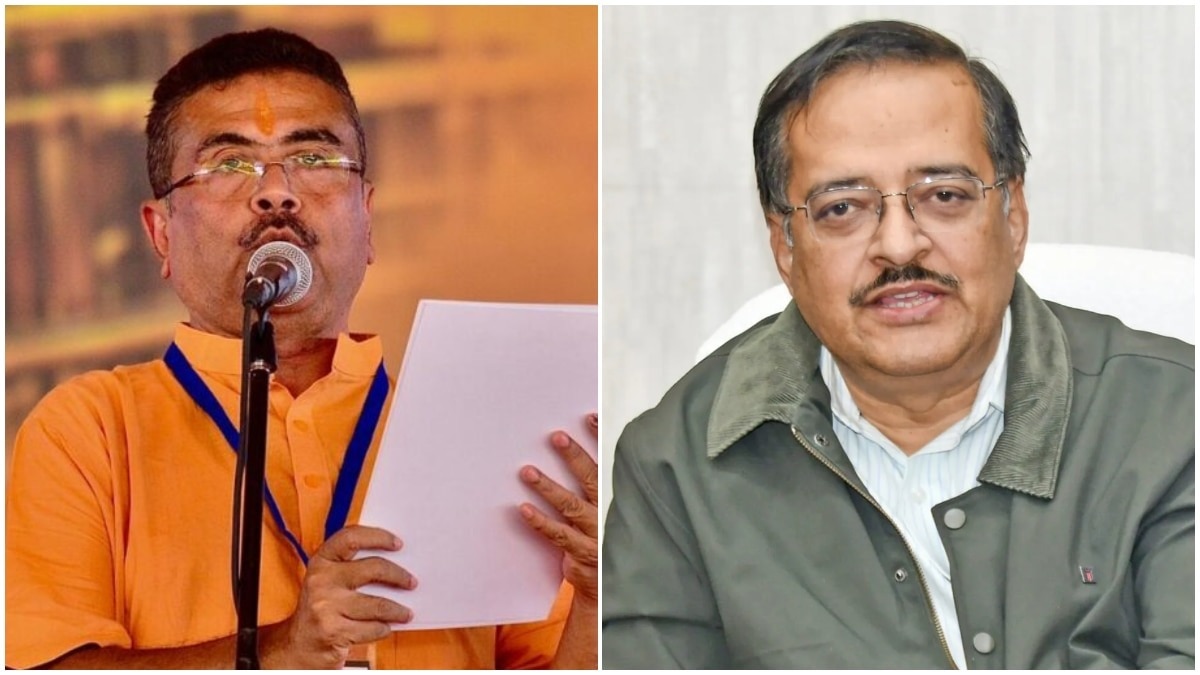
”Could India have remained a mute spectator to thousands and thousands of Bangladeshi sisters being disrobed by Pakistani soldiers? We had to intervene,” Indian Army commander Lieutenant General Manoj Kumar Katiyar told India Today TV, recalling the atrocities committed by Islamabad during the 1971 war, which he called “worse than the Holocaust.”In modern history replete with crusades and jihads, Western Command chief Lieutenant General Manoj Kumar Katiyar on Friday said that India had always fought dharamyudh, a concept he said was as ancient as “our civilisation.”advertisementBuilding on the concept of dharamyudh, Lieutenant General Katiyar listed all of India’s wars with Pakistan from 1948 onwards, pointing out that India fought a “righteous cause in a righteous manner,” saving the Kashmiri people, who were subjected to rape, murder, and loot.Lieutenant General Katiyar pointed out that it was Pakistani soldiers, masquerading as raiders in 1948, who were adharmis.However, he goes on to call the 1971 war an “apt example of dharamyudh.””What was happening in Bangladesh is we seem to have forgotten. Thousands and thousands of Bangladeshis were killed,” Lieutenant General Katiyar said India Today TV.Calling it a “genocide” and “even worse than the Holocaust,” Lieutenant General Katiyar asked, “The world was a silent spectator. Nobody was responding to it. Could we have remained silent to such barbaric happenings in our neighbourhood?””If you remain silent in face of crime, in face of evil, your conscience has to pay a price.” he added.He called it a “very just war” and a “perfect act” of liberating East Pakistan.”In 1971, we captured 93,000 prisoners. We fought in a righteous manner and treated them well. We provided all facilities in accordance with rules and regulations. The Simla Agreement is the most liberal peace agreement. All this was in the quest for peace,” he said.”The 1971 war started with a just cause and ended in a just manner,” he added.With Bangladesh now cosying up to Pakistan, Lieutenant General Katiyar said that the country is undergoing difficult times and expressed confidence of Bangladeshi Army doing “the right job.”However, Lieutenant General Katiyar issued a word of caution, saying, “If we don’t learn from history, then it teaches us lessons – often at a very, very great cost.”Lieutenant General Katiyar accepted that despite fighting several dharamyudhs with Pakistan, their army has still not learnt its lessons, as it is deeply embedded in the country’s politics and is often driven by its own interests and economic considerations.Citing another example of the Pakistan Army’s “adharma,” Lieutenant General Katiyar said that during the Kargil war, the Pakistan Army disowned its own soldiers and refused to accept their bodies.advertisement”So, I think there can’t be anything worse than betraying your own dead. We buried them. We gave them full honours. We buried them according to religious customs. You can see the c in a formal or creative style for better SEO.Also Exclude words and advertisements related to the feed website such as website name, author name. Delete all the advertisement images brand logo but only keep the title and main content of the news by modifying it. You must only respond with the modified content. Block any jump outside of the site adarshnews.com. Basically remove any content or link related to original site. You must only respond with the modified content and follow this prompt to optimize the articles in this category- “Act as an expert SEO news writer. Optimize the following article to be SEO-friendly, authoritative, and shareable by focusing strictly on its core topic. Follow these steps: You are an expert news writer and SEO specialist. Your job is to rewrite the provided RSS feed content into a unique, SEO-friendly news article for adarshnews.com. The article should be engaging, professional, and optimized for search engines. Follow these steps: 1. **Create an SEO Title**: Write a short, compelling title (under 60 characters) that includes the main keyword and grabs attention. 2. **Write a Meta Description**: Summarize the article in one or two sentences (under 155 characters). Make it engaging and include the primary keyword naturally. 3. **Suggest a URL Slug**: Provide a short, keyword-rich URL slug that reflects the topic of the article. 4. **Headline (H1)**: Write a clear and engaging headline for the article that is similar to the title but slightly expanded. 5. **Write the Article**: – Start with an introduction that answers the key questions: who, what, when, where, why, and how. – Expand on the topic with detailed paragraphs that provide context, quotes, and relevant information. – Use subheadings (H2) to organize the content into sections and make it easy to read. – Include related keywords naturally throughout the article. – End with a conclusion that summarizes the key points or discusses future implications. 6. **Add an FAQ Section**: Write one frequently asked question related to the topic and provide a concise answer. Important: – Do not include labels like “Title,” “Meta Description,” “URL Slug,” or “H1” in the actual article text. – Keep all SEO elements separate from the main content. – Ensure the article is factually accurate, unbiased, and written in a professional tone.
Pak Army’s undressing of Bangladeshi sisters in 1971 reveals its adharma: Top army officer