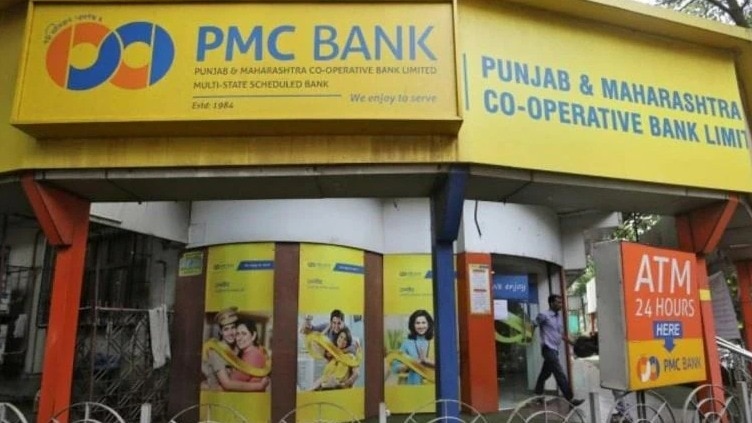
In what appears to be a textbook case of institutional failure and financial engineering gone wrong, a forensic audit has exposed a shocking gap between sanctioned credit and actual disbursement in a high-stakes case involving Punjab & Maharashtra Co-operative (PMC) Bank and a real estate entity.The audit reveals that PMC Bank formally approved loans amounting to Rs 87.5 crore for Prithvi Realtors and Hotels Pvt. Ltd., but no actual money ever left the bank’s vaults. Yet, interest charges kept accruing over the years, pushing the so-called “outstanding” to over Rs 150 crore.advertisementConducted by Deepak Singhania & Associates, Chartered Accountants, the audit was commissioned in the context of an ongoing arbitration dispute. The firm reviewed key financial records—loan approvals, mortgage documents, and account statements—all pointing to one disturbing reality: not a single rupee was transferred to the borrower’s account after October 2012.The original facility began as a Rs10 crore mortgage overdraft. It was subsequently ramped up to Rs 87.5 crore, allegedly secured against a 53,680 sq. m. plot in Vasai, Thane. But post-sanction, the trail goes cold. No debit entries. No fund movement. Just rising interest liabilities on an empty balance.The audit report strikes hard and says, “There is no substantiation of disbursement. No transaction entries. No repayment history. What exists is interest on a non-existent principal.”The issue took a darker turn when an arbitration tribunal reviewing the same case described the situation as deliberate deception. The panel flagged instances of forged documents, impersonation, and wilful misrepresentation, categorising the case as “premeditated financial fraud of serious magnitude.”Citing landmark Supreme Court judgments, the tribunal declared itself unfit to adjudicate, emphasising that fraud of this scale lies outside the scope of arbitration.Now, the matter has escalated to the National Company Law Tribunal (NCLT), where legal arguments are set to revolve around the enforceability of a liability created without a corresponding disbursement.Legal experts suggest that this case may become a benchmark for identifying synthetic debt traps—where sanctioned loans never materialise, yet borrowers are legally chased for repayment on paper-based obligations.At its core, the audit report exposes a dangerous financial loophole: a system where loans exist only in documentation, but the liability is real, enforceable, and crushing. And unless reined in, such mechanisms can destabilise the very foundation of responsible lending.- Ends in a formal or creative style for better SEO.Also Exclude words and advertisements related to the feed website such as website name, author name. Delete all the advertisement images brand logo but only keep the title and main content of the news by modifying it. You must only respond with the modified content. Block any jump outside of the site adarshnews.com. Basically remove any content or link related to original site. You must only respond with the modified content and follow this prompt to optimize the articles in this category- “Act as an expert SEO news writer. Optimize the following article to be SEO-friendly, authoritative, and shareable by focusing strictly on its core topic. Follow these steps: You are an expert news writer and SEO specialist. Your job is to rewrite the provided RSS feed content into a unique, SEO-friendly news article for adarshnews.com. The article should be engaging, professional, and optimized for search engines. Follow these steps: 1. **Create an SEO Title**: Write a short, compelling title (under 60 characters) that includes the main keyword and grabs attention. 2. **Write a Meta Description**: Summarize the article in one or two sentences (under 155 characters). Make it engaging and include the primary keyword naturally. 3. **Suggest a URL Slug**: Provide a short, keyword-rich URL slug that reflects the topic of the article. 4. **Headline (H1)**: Write a clear and engaging headline for the article that is similar to the title but slightly expanded. 5. **Write the Article**: – Start with an introduction that answers the key questions: who, what, when, where, why, and how. – Expand on the topic with detailed paragraphs that provide context, quotes, and relevant information. – Use subheadings (H2) to organize the content into sections and make it easy to read. – Include related keywords naturally throughout the article. – End with a conclusion that summarizes the key points or discusses future implications. 6. **Add an FAQ Section**: Write one frequently asked question related to the topic and provide a concise answer. Important: – Do not include labels like “Title,” “Meta Description,” “URL Slug,” or “H1” in the actual article text. – Keep all SEO elements separate from the main content. – Ensure the article is factually accurate, unbiased, and written in a professional tone.
PMC Bank has approved a loan of Rs 87 crore but has only disbursed Rs 0, leading to an increase in outstanding dues to Rs 150 crore.