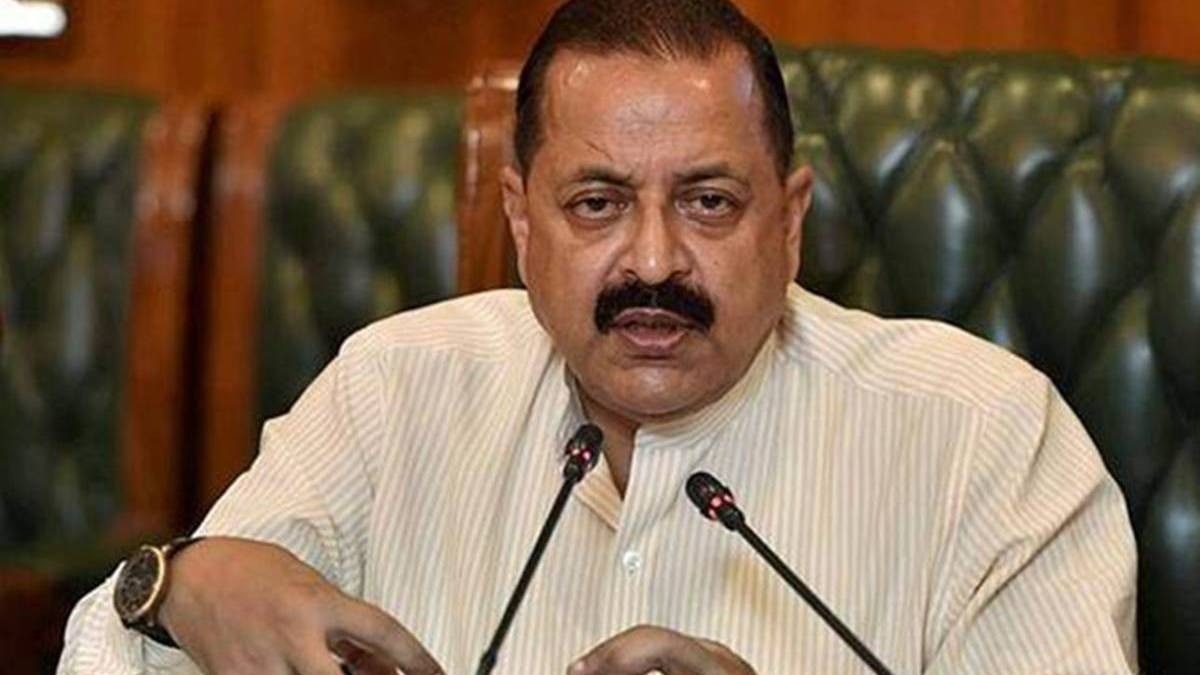
In a major policy shift that could redefine India’s energy landscape, the government has announced its intention to open up the civil nuclear sector to private participation.The declaration was made by the Minister of Science and Technology and Earth Sciences, Dr Jitendra Singh, who emphasised that this transformative step is part of the broader vision of aligning India’s developmental strategies with global standards.advertisement”This is a sector that has historically operated under a veil of secrecy. For decades, the nuclear domain remained untouched by private industry due to legacy policies and strategic concerns. But today, under the leadership of Prime Minister Narendra Modi, we are ready to break past taboos and take bold decisions,” Dr Singh stated.A STRATEGIC SHIFT IN POLICYHighlighting the importance of this decision, the minister remarked: “The Prime Minister himself has said this – we are going to open this up to the private sector. This has been possible only because we have a Prime Minister with the conviction and capacity to break outdated mindsets.”According to Dr Singh, the move aligns with India’s aspiration to become a top global economy, which necessitates adopting international benchmarks and best practices. “We aim to reach the pedestal of rank one in the global economy. To get there, our benchmarks must be global benchmarks,” he said.advertisementThe minister pointed out that synergy between the public and private sectors is now non-negotiable for achieving high-end technological growth, particularly in sectors that have traditionally remained government monopolies.LEARNING FROM THE SPACE SECTORDrawing parallels with India’s recent success in the space sector, Dr Singh cited it as a model for what private sector collaboration can achieve.”Just look at what happened when we opened up the space sector. In just four years, we moved from being a minimal player to building an 8 billion USD economy. Projections now estimate we will exceed 45 billion USD in the coming years,” he said.He noted that this “sea change” was driven by enabling private enterprise to innovate and scale alongside government agencies such as ISRO.BIOTECHNOLOGY: A MODEL FOR INSTITUTIONALISED PRIVATE PARTNERSHIPDr Singh also referred to similar collaborations in the biotechnology sector, where the government has developed structured mechanisms for private engagement. “We have institutionalised this collaboration and created interfaces which only a few countries have been able to achieve,” he noted.CIVIL NUCLEAR SECTOR: THE NEXT FRONTIERThe civil nuclear sector, which until now has remained firmly under state control due to strategic and security sensitivities, is now being considered for a new operational framework that includes private entities.advertisement”We are still working out the modalities of how exactly this will be done. The Prime Minister has given us the green signal, and we are committed to building a robust system where the private a in a formal or creative style for better SEO.Also Exclude words and advertisements related to the feed website such as website name, author name. Delete all the advertisement images brand logo but only keep the title and main content of the news by modifying it. You must only respond with the modified content. Block any jump outside of the site adarshnews.com. Basically remove any content or link related to original site. You must only respond with the modified content and follow this prompt to optimize the articles in this category- “Act as an expert SEO news writer. Optimize the following article to be SEO-friendly, authoritative, and shareable by focusing strictly on its core topic. Follow these steps: You are an expert news writer and SEO specialist. Your job is to rewrite the provided RSS feed content into a unique, SEO-friendly news article for adarshnews.com. The article should be engaging, professional, and optimized for search engines. Follow these steps: 1. **Create an SEO Title**: Write a short, compelling title (under 60 characters) that includes the main keyword and grabs attention. 2. **Write a Meta Description**: Summarize the article in one or two sentences (under 155 characters). Make it engaging and include the primary keyword naturally. 3. **Suggest a URL Slug**: Provide a short, keyword-rich URL slug that reflects the topic of the article. 4. **Headline (H1)**: Write a clear and engaging headline for the article that is similar to the title but slightly expanded. 5. **Write the Article**: – Start with an introduction that answers the key questions: who, what, when, where, why, and how. – Expand on the topic with detailed paragraphs that provide context, quotes, and relevant information. – Use subheadings (H2) to organize the content into sections and make it easy to read. – Include related keywords naturally throughout the article. – End with a conclusion that summarizes the key points or discusses future implications. 6. **Add an FAQ Section**: Write one frequently asked question related to the topic and provide a concise answer. Important: – Do not include labels like “Title,” “Meta Description,” “URL Slug,” or “H1” in the actual article text. – Keep all SEO elements separate from the main content. – Ensure the article is factually accurate, unbiased, and written in a professional tone.
Prepared to challenge conventions: The government plans to allow private involvement in the nuclear industry.