**India-Russia Relations Strengthened Amid US Tariff Challenges**
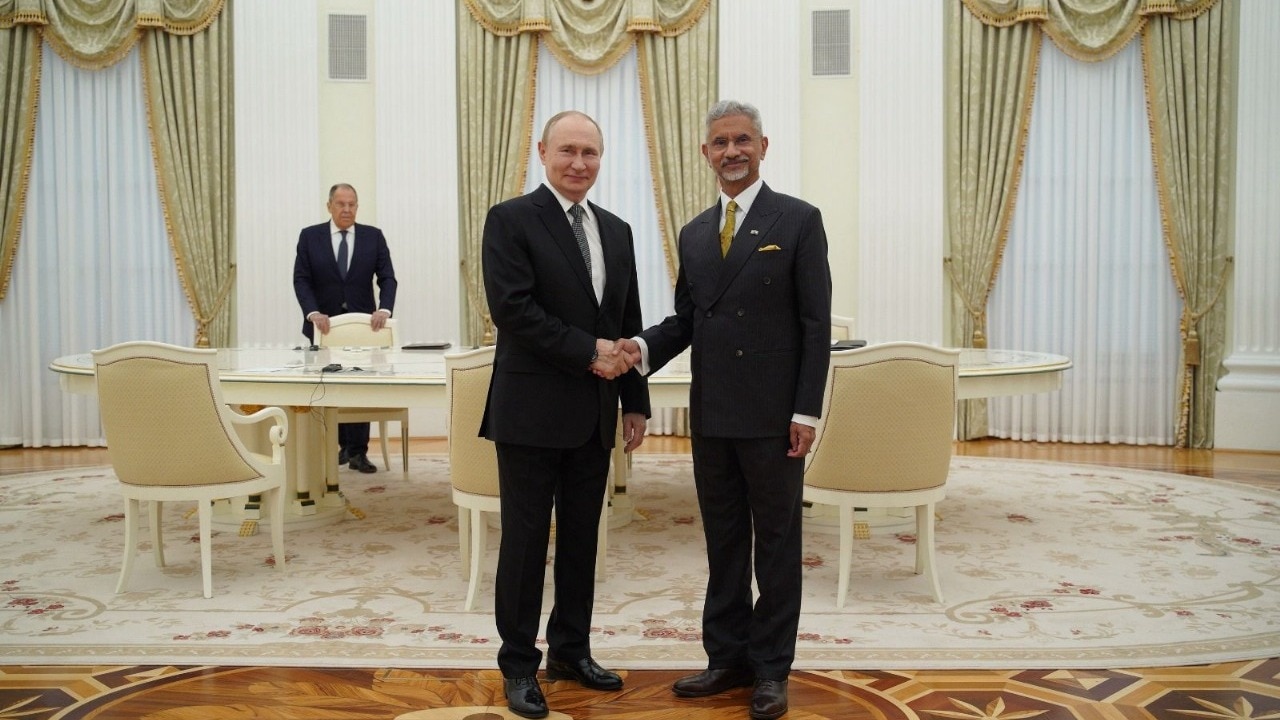
External Affairs Minister S. Jaishankar is currently on a three-day visit to Russia, where he met with President Vladimir Putin in Moscow. This high-profile meeting occurs against the backdrop of significant US tariffs, which have been raised to 50% on Indian goods. The Trump administration has indicated that this move is a response to India’s continued purchase of Russian crude oil, implying that such transactions may be indirectly supporting Moscow’s military actions in Ukraine.
During his visit, Jaishankar emphasized the enduring nature of India-Russia relations, describing them as “the steadiest of the major relationships in the world after the Second World War.” Russian Foreign Minister Sergey Lavrov supported this view, characterizing the partnership as a “special strategic partnership” shaped by the leadership of both nations.
Following discussions with Deputy Prime Minister Denis Manturov, Jaishankar highlighted the need for enhanced trade relations, urging Russian companies to collaborate more intensively with Indian partners. He stressed the importance of diversifying the trade portfolio and expanding joint ventures, stating, “Doing more and doing differently should be our mantra.”
Jaishankar outlined several key issues that need addressing, including tariff and non-tariff barriers, logistics bottlenecks, and the promotion of connectivity through initiatives like the International North-South Transport Corridor and the Chennai-Vladivostok Corridor. He also emphasized the necessity for smooth payment mechanisms to facilitate trade.
On the previous day, Roman Babushkin, Russia’s Charge d’Affaires in India, remarked that India-Russia relations are on an “upward trajectory” despite facing Western sanctions and geopolitical pressures. He noted that energy and defense remain critical pillars of this partnership, which continues to grow in the face of challenges.
Trade between India and Russia has seen remarkable growth, increasing from USD 13 billion in 2021 to an estimated USD 68 billion by 2024-25, primarily driven by Indian imports of Russian hydrocarbons. However, Jaishankar pointed out the widening trade imbalance, with India’s trade deficit with Russia escalating from USD 6.6 billion in 2021 to nearly USD 59 billion.
The discussions in Moscow are taking place amid heightened tensions in India-US relations, particularly following President Trump’s decision to impose steep tariffs on Indian goods, including an additional 25% penalty for India’s ongoing purchase of Russian crude oil. While Jaishankar did not directly address the US tariffs, he acknowledged that the talks were occurring “in the backdrop of a complex geopolitical situation,” reiterating the importance of India-Russia ties.
In conclusion, Jaishankar’s visit underscores the resilience of India-Russia relations in the face of external pressures, with both nations committed to strengthening their partnership through enhanced trade and cooperation.
**FAQ**
**What are the main challenges facing India-Russia trade relations?**
The primary challenges include high tariffs imposed by the US, a widening trade deficit, and logistical bottlenecks that hinder trade efficiency.