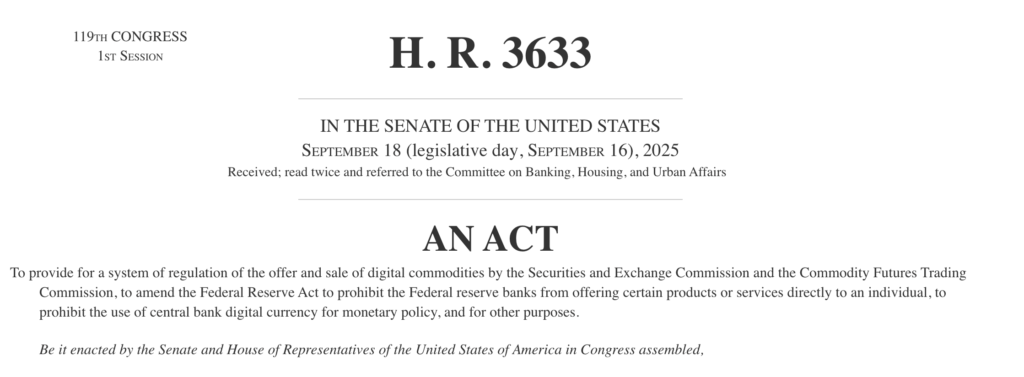
Bitcoin Magazine Senate Banking Committee Postpones CLARITY Act Markup After Crypto Industry Backlash The Senate Banking Committee postponed its planned markup of the Digital Asset Market CLARITY Act, capping what had been expected to be a pivotal week for U.S. crypto policy with an anticlimactic halt amid growing industry opposition and unresolved political disputes, according to reporting from Crypto in America. The decision came after tensions escalated throughout the week as crypto companies and trade groups voiced frustration over late-stage amendments to the 278-page market structure bill. Critics argued the changes tilted the legislation further in favor of banks and traditional finance, particularly by tightening restrictions around stablecoin rewards and tokenization. Compounding the uncertainty, Democrats on the committee continued to press for stronger ethics provisions that would bar senior government officials — including the president — from personally profiting from crypto ventures. Those provisions have repeatedly stalled in negotiations with the White House, contributing to the impasse. NEW: US Senate Banking Committee postpones Bitcoin and crypto market structure legislation markup after Coinbase and others withdrew their support for the bill pic.twitter.com/XEQT7p2geR— Bitcoin Magazine (@BitcoinMagazine) January 15, 2026 The immediate catalyst for the CLARITY Act postponement arrived around 4:00 p.m. Jan. 14, when Coinbase CEO Brian Armstrong announced that the exchange was withdrawing its support for the bill. Coinbase had been one of the most influential industry backers of a comprehensive market structure framework, investing heavily in lobbying efforts on Capitol Hill. “We appreciate all the hard work by members of the Senate to reach a bipartisan outcome, but this version would be materially worse than the current status quo,” Armstrong wrote in a post on X. “We’d rather have no bill than a bad bill.” In a follow-up post, Armstrong said he remained optimistic that lawmakers could still reach an acceptable compromise and pledged that Coinbase would continue engaging with policymakers on the CLARITY Act. The withdrawal was a major setback. The loss of support from one of crypto’s most prominent policy voices risked signaling to undecided senators that the bill lacked sufficient industry consensus, raising the likelihood the committee would delay or abandon the markup altogether. While the markup was ultimately postponed, Coinbase’s decision did not trigger a complete industry retreat. Several major firms and advocacy groups — including a16z, Circle, Paradigm, Kraken, Ripple, Coin Center, and the Digital Chamber — publicly reaffirmed their support for moving forward with a markup. “It is easy to walk away when a process gets difficult,” Kraken co-CEO Arjun Sethi said in a post on X. “What is hard and what actually matters is continuing to show up, working t in a formal or creative style for better SEO.Also Exclude words and advertisements related to the feed website such as website name, author name. You must only respond with the modified content. Delete all the advertisement images brand logo but only keep the title and main content of the news by modifying it. Block any jump outside of the site adarshnews.com. Basically remove any content or link related to original site. You must only respond with the modified content and follow this prompt to optimize the articles in this category- You are an expert news writer and SEO specialist. Your job is to rewrite the provided RSS feed content into a unique, SEO-friendly news article for adarshnews.com. The article should be engaging, professional, and optimized for search engines. Follow these steps: 1. **Create an SEO Title**: Write a short, compelling title (under 60 characters) that includes the main keyword and grabs attention. 2. **Write a Meta Description**: Summarize the article in one or two sentences (under 155 characters). Make it engaging and include the primary keyword naturally. 3. **Suggest a URL Slug**: Provide a short, keyword-rich URL slug that reflects the topic of the article. 4. **Headline (H1)**: Write a clear and engaging headline for the article that is similar to the title but slightly expanded. 5. **Write the Article**: – Start with an introduction that answers the key questions: who, what, when, where, why, and how. – Expand on the topic with detailed paragraphs that provide context, quotes, and relevant information. – Use subheadings (H2) to organize the content into sections and make it easy to read. – Include related keywords naturally throughout the article. – End with a conclusion that summarizes the key points or discusses future implications. 6. **Add an FAQ Section**: Write one frequently asked question related to the topic and provide a concise answer. Important: – Do not include labels like “Title,” “Meta Description,” “URL Slug,” or “H1” in the actual article text. – Keep all SEO elements separate from the main content. – Ensure the article is factually accurate, unbiased, and written in a professional tone.
Senate Banking Committee Delays Markup of CLARITY Act Following Crypto Sector Backlash