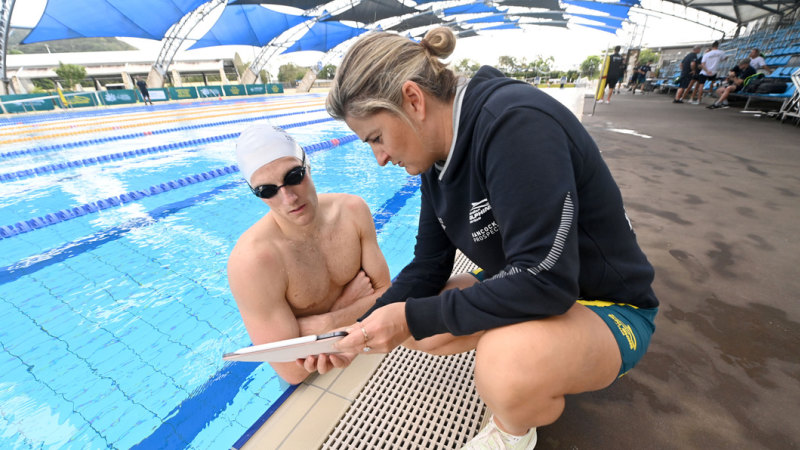
Swimming Australia is making significant strides in the integration of artificial intelligence, implementing this technology across its training facilities nationwide in an effort to dominate the swimming medal standings at the Los Angeles 2028 Olympics. Following a successful performance at the recent Paris Olympics, where Australia secured seven gold medals—just one less than the United States—team officials are optimistic that their new technological initiatives will help them achieve the top position in three years.
While much attention has been given to how artificial intelligence and machine learning can enhance labor efficiency and productivity, Swimming Australia’s general manager, Jess Corones, is focused on using these tools to reduce lap times for the nation’s elite swimmers. Corones refers to Sparta, a custom race analysis system developed in collaboration with Amazon Web Services (AWS), as the organization’s competitive advantage. Sparta employs advanced computer vision and machine learning to monitor swimmers across all eight lanes of the training pool, collecting data on metrics such as stroke rate, breathing patterns, distance per stroke, and speed, which is then stored in Swimming Australia’s data lake.
Reflecting on the golden era of Australian swimming, which featured legends like Susie O’Neill, Grant Hackett, and Ian Thorpe, Corones notes that training was predominantly conducted in groups. In contrast, today’s training is more individualized. With the aid of cloud computing, coaches and sports scientists can gain deeper insights into each athlete’s performance, allowing for more tailored training plans.
“We’re always striving to keep up with the Americans, who are formidable competitors. Our goal is to enter LA as the best-prepared team, and leveraging technology and data is crucial to that,” Corones stated.
Swimming Australia has trained sophisticated machine learning algorithms on footage from global swimming competitions, including the World Aquatics Championships, and incorporated competitor data to help coaches and swimmers track their progress. Coaches can interact with the data using natural language, posing questions about technique or identifying the fastest turns.
“Currently, processing each race takes about 30 minutes due to its complexity and the computational power required,” Corones explained. “With AWS, we aim to provide coaches with immediate access to all race metrics, facilitating real-time discussions with athletes.”
Corones emphasizes that the coaching staff are not expected to be tech experts; rather, they should remain top-tier coaches who can effectively utilize and interpret the latest data to enhance their decision-making and coaching strategies. Additionally, Swimming Australia has developed a relay app that can accurately predict the teams that opponents are likely to select.