**Bhagavad Gita and Natyashastra Recognized by UNESCO**
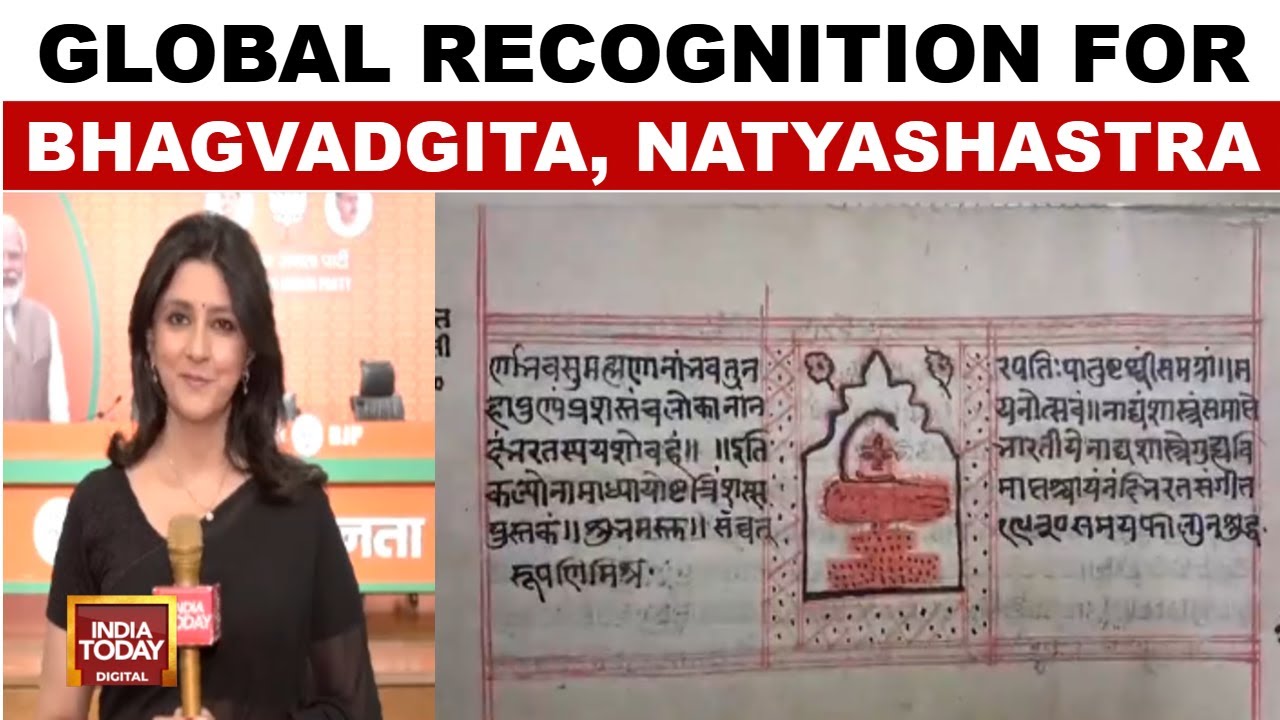
The Bhagavad Gita and Natyashastra have been inscribed in UNESCO’s Memory of the World Register, highlighting their significance in the cultural heritage of humanity. This prestigious recognition underscores the importance of these ancient texts in shaping philosophical thought and artistic expression.
The Bhagavad Gita, a 700-verse Hindu scripture, is part of the Indian epic Mahabharata. It presents a conversation between Prince Arjuna and Lord Krishna, addressing the moral and philosophical dilemmas faced by individuals. Its teachings on duty, righteousness, and devotion have influenced countless generations and continue to resonate globally.
Similarly, the Natyashastra, attributed to the sage Bharata Muni, is a foundational text on the performing arts, encompassing drama, dance, and music. It provides comprehensive guidelines on aesthetics, performance techniques, and the emotional impact of art, making it a cornerstone of Indian classical arts.
The inclusion of these texts in the Memory of the World Register not only preserves their legacy but also promotes awareness of their cultural and historical significance. This recognition serves as a reminder of the rich intellectual traditions that have emerged from India and their enduring influence on global culture.
In conclusion, the inscription of the Bhagavad Gita and Natyashastra by UNESCO is a momentous event that celebrates the profound wisdom and artistic heritage of India. It encourages future generations to explore and appreciate these timeless works.
**FAQ**
**What is the significance of the Bhagavad Gita and Natyashastra?**
The Bhagavad Gita offers profound philosophical insights, while the Natyashastra serves as a foundational text for the performing arts, both contributing significantly to cultural heritage.