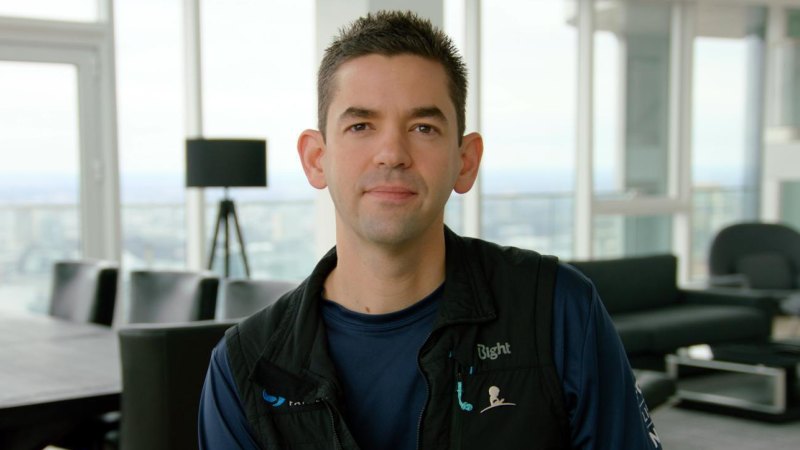
Asked what people should do if astronomers identified a “city-killer” asteroid on a collision course for the United States, NASA’s best advice was far from reassuring.“Pray,” said Charles Bolden, the head of the space agency.Jared Isaacman, a private astronaut and billionaire ally of Elon Musk who has been lined up by Donald Trump to lead NASA.Credit: APOver recent weeks, scientists have been warily scanning the night’s sky for evidence of YR4 – an asteroid 90 metres in diameter that experts feared had a very real risk of hitting our planet in 2032.Fortunately, the possibility of a cataclysmic impact from the rock was dramatically reduced last week.The risk of YR4 hitting Earth is now just a vanishingly small 0.004 per cent, according to NASA. But the threat of a future collision with our planet that causes millions of casualties is still being taken deadly seriously by the space industry.In fact, for more than two decades, NASA has been standing up Earth’s planetary defence capabilities, working with space agencies and astronomers around the world.In 1994, NASA was ordered to catalogue all asteroids measuring more than 1 kilometres, and in 2005 this was extended to objects of more than 140 metres in diameter.The task of protecting Earth from these fragments – leftovers from the creation of the solar system 4.6 billion years ago – now falls to Jared Isaacman, a private astronaut and billionaire ally of Elon Musk who has been lined up by Donald Trump to lead NASA.At the time of Bolden’s advice to Congress in 2013, the space agency had identified 95 per cent of all asteroids with the potential to destroy human civilisation, but just a tiny fraction of so-called “city-killer” asteroids – of which there are more than 25,000 – that are smaller and more difficult to track.That year, Earth came close to disaster when an asteroid exploded over the Russian city of Chelyabinsk, injuring 1500 people.NASA now houses the Planetary Defence Coordination Office, set up in 2016 amid concerns that the US was failing to properly track the most dangerous “near-Earth objects”. Scientists have currently mapped about half of the space rocks deemed to have the potential to level a city.Isaacman, who has not yet been confirmed as NASA administrator, has said not enough is being done to protect Earth from such threats.“Planetary defence against NEO threats seems disproportionately underfunded relative to the likelihood and magnitude of the associated risks [and] consequences,” he said on X.At one stage, scientists gave the YR4 a 3.1 per cent chance of hitting Earth. Some of their analysis suggested this risk could rise as high as 20 per cent.It received a ranking of three on the “Torino scale”, which ranks high-risk space objects – only the second asteroid to achieve such a ranking. Now they believe it is more likely to hit the Moon.When it comes to planetary defence, SpaceX has so far been the primary launch partner for testing
The billionaire Elon Musk disciple protecting Earth from city-killing asteroids