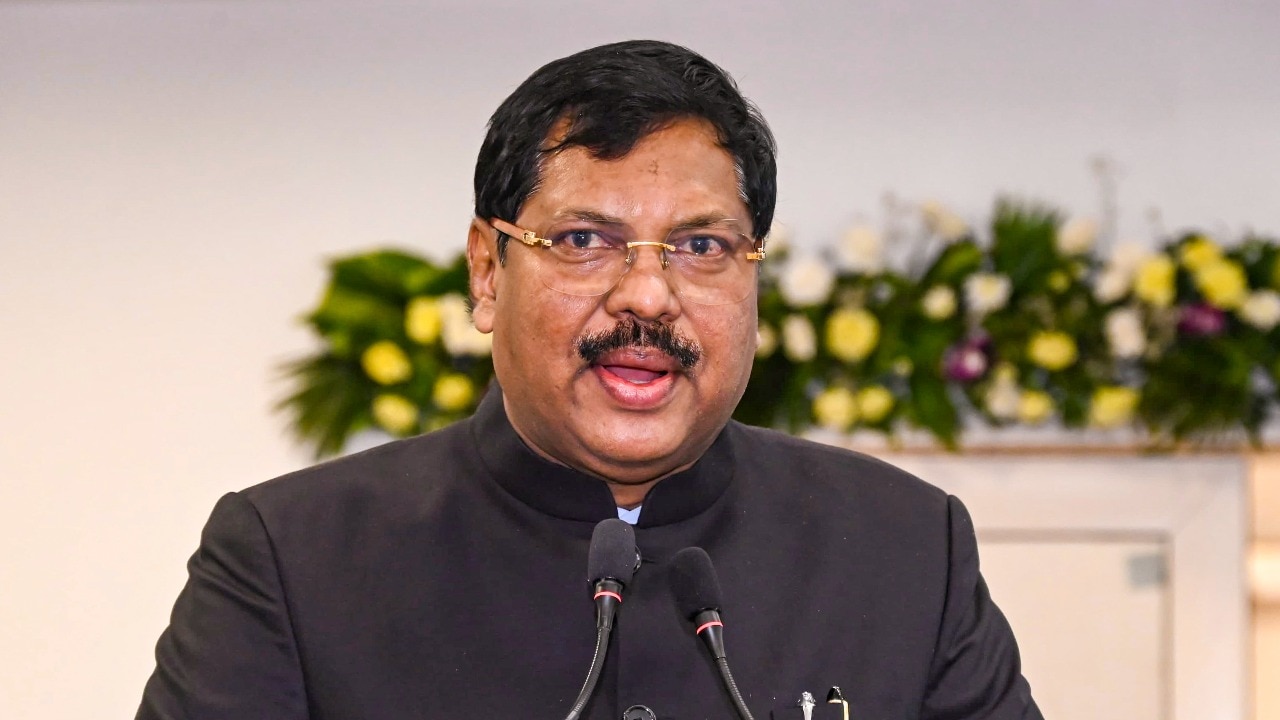
**Judicial Activism vs. Judicial Terrorism: Insights from Chief Justice BR Gavai**
Chief Justice of India, BR Gavai, recently emphasized the importance of maintaining a balance in judicial activism during an informal discussion with Indian students at Trinity College, Oxford Union. He highlighted that while judicial activism is a vital component of India’s democracy, it should not devolve into what he termed “judicial terrorism.” This statement comes amid ongoing debates regarding the judiciary’s role in legislative matters.
Gavai articulated that judicial activism is an essential aspect of the legal framework but cautioned against overstepping boundaries. “Judicial activism is bound to stay. At the same time, judicial activism should not be turned into judicial terrorism,” he remarked, addressing concerns about the judiciary’s encroachment into legislative territory. He noted that the judiciary must intervene only when the legislature or executive fails to uphold fundamental rights, advocating for a restrained approach to judicial review.
He elaborated that judicial intervention should be limited to exceptional cases, such as when a statute violates the Constitution’s basic structure or fundamental rights, or when it is blatantly arbitrary or discriminatory. “The courts can exercise it, and the courts have done so,” he stated, reinforcing the judiciary’s role in protecting citizens’ rights.
Gavai’s comments resonate with the sentiments expressed by Justice Surya Kant at the ‘Envision India Conclave’ in San Francisco, where he warned against judicial overreach that could disrupt the balance of power. Kant emphasized that courts should facilitate democratic dialogue and uphold the rule of law, particularly during politically turbulent times.
As the second Dalit and first Buddhist to serve as India’s Chief Justice, Gavai described the Constitution as a “quiet revolution etched in ink,” a transformative document that not only guarantees rights but also uplifts historically marginalized communities. He urged Indian students studying abroad to return to India after their education, encouraging them to contribute to nation-building efforts. “Bharat needs you, respond to that need,” he said, calling for a collective effort to strengthen the nation.
In conclusion, Chief Justice Gavai’s remarks underscore the delicate balance required in judicial activism, advocating for a judiciary that respects its boundaries while remaining vigilant in protecting fundamental rights.
**FAQ**
**What is judicial activism, and why is it important?**
Judicial activism refers to the proactive role of the judiciary in interpreting laws and ensuring justice, particularly in protecting fundamental rights. It is crucial for maintaining checks and balances within a democratic system.