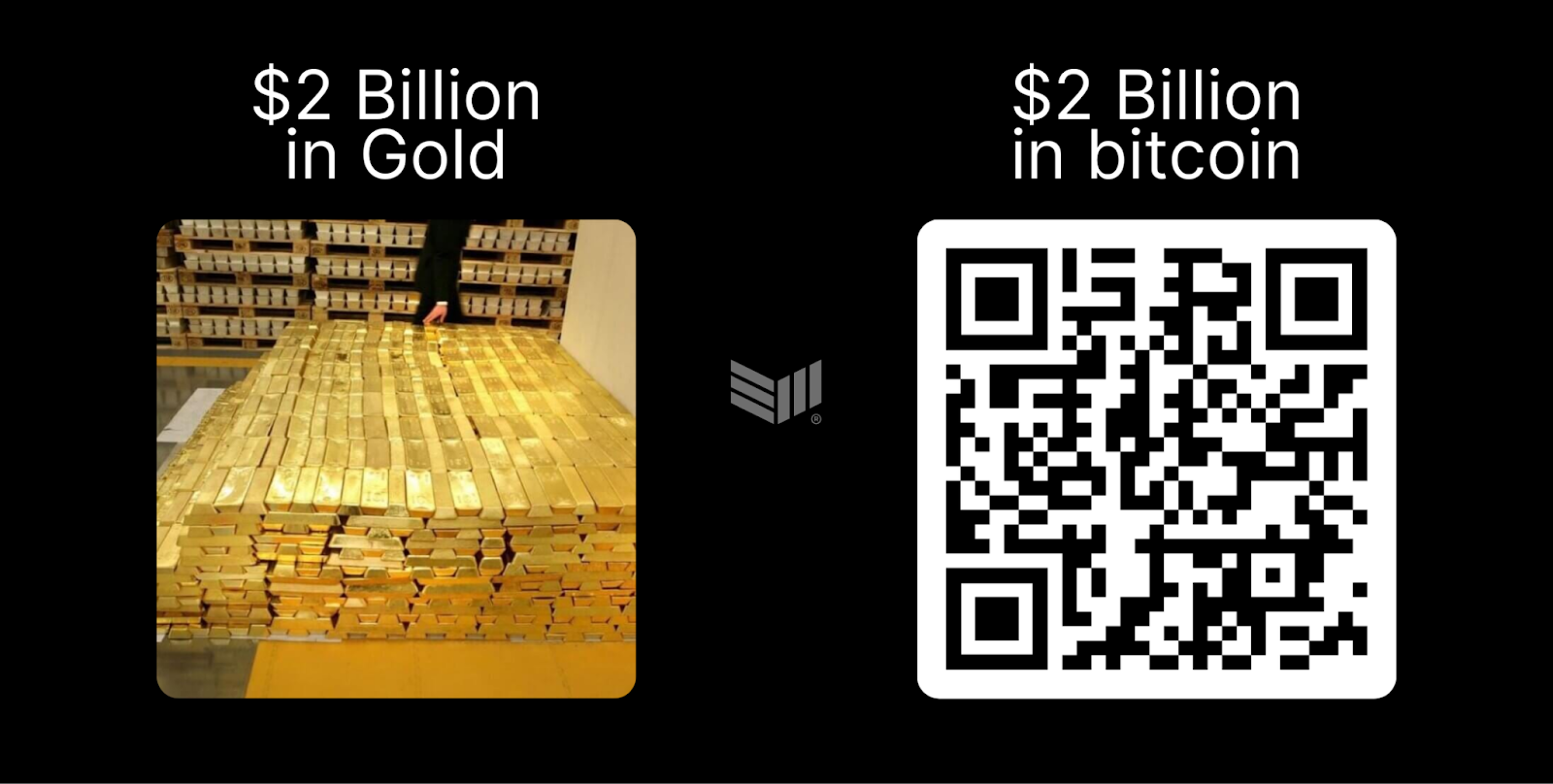
Bitcoin Magazine The “Digital Gold” Narrative Sells Bitcoin Short Humans like to make analogies to understand new things better. It makes complete sense why we would look for one in the case of Bitcoin. Bitcoin is a novel concept to most people hearing about it for the first time, and can require great effort to grasp fully. Using the phrase “digital gold” to describe Bitcoin is incredibly palatable, and even if you don’t understand the functionality of the network, you can know certain things to be true: Bitcoin is scarce, global, and a store of value. This narrative has worked well, ushering in institutional and nation-state adoption. The first section of President Donald Trump’s executive order establishing the Strategic Bitcoin Reserve states, “As a result of its scarcity and security, Bitcoin is often referred to as ‘digital gold’.” On one end, we should be celebrating these incredible achievements for Bitcoin. We have made massive strides in adoption by propelling the “digital gold” narrative that should not be understated. However, for Bitcoin to reach its true potential, the narrative needs to shift. Bitcoin is NOT “digital gold”. Labeling Bitcoin as “digital gold” is a misrepresentation that reduces the world’s most revolutionary form of money to a mere store of value. Bitcoin’s fundamentals make even the most desirable attributes of gold completely obsolete while simultaneously being a faster, safer, more decentralized alternative to fiat currencies. Let’s dive into what separates Bitcoin from gold. Scarcity vs Finicity Likely the largest selling point for gold, and why it’s survived as a store of value for thousands of years, is its scarcity. It’s estimated that over the past 100 years, gold’s supply has only increased by around 1-2% each year. This is because there is no real economic incentive to increase the supply of gold through mining. In addition to how difficult new gold is to find, labor, equipment, and environmental compliance costs make the process extremely difficult to justify financing. For this reason, gold has held its value well throughout history, with its monetary status dating back to 3000 BC. In the 1st century AD in Ancient Rome, you could buy a high-quality toga for the same price in gold as a luxury tailored suit today! Gold’s scarcity and the impact that it has had on society for thousands of years cannot be understated. However, in the age of Bitcoin, continuing to measure economic value in terms of an asset with a fluctuating supply seems arbitrary. Bitcoin is not scarce, but finite, with a set supply of 21 million coins entering circulation. There is no “gold rush” for Bitcoin, and, as technology advances, we won’t find Bitcoin on an asteroid. Through technological and mathematical advancements, we now have the capabilities to buy and exchange cash with a fixed supply. The significance of this development in a formal or creative style for better SEO.Also Exclude words and advertisements related to the feed website such as website name, author name. You must only respond with the modified content. Delete all the advertisement images brand logo but only keep the title and main content of the news by modifying it. Block any jump outside of the site adarshnews.com. Basically remove any content or link related to original site. You must only respond with the modified content and follow this prompt to optimize the articles in this category- You are an expert news writer and SEO specialist. Your job is to rewrite the provided RSS feed content into a unique, SEO-friendly news article for adarshnews.com. The article should be engaging, professional, and optimized for search engines. Follow these steps: 1. **Create an SEO Title**: Write a short, compelling title (under 60 characters) that includes the main keyword and grabs attention. 2. **Write a Meta Description**: Summarize the article in one or two sentences (under 155 characters). Make it engaging and include the primary keyword naturally. 3. **Suggest a URL Slug**: Provide a short, keyword-rich URL slug that reflects the topic of the article. 4. **Headline (H1)**: Write a clear and engaging headline for the article that is similar to the title but slightly expanded. 5. **Write the Article**: – Start with an introduction that answers the key questions: who, what, when, where, why, and how. – Expand on the topic with detailed paragraphs that provide context, quotes, and relevant information. – Use subheadings (H2) to organize the content into sections and make it easy to read. – Include related keywords naturally throughout the article. – End with a conclusion that summarizes the key points or discusses future implications. 6. **Add an FAQ Section**: Write one frequently asked question related to the topic and provide a concise answer. Important: – Do not include labels like “Title,” “Meta Description,” “URL Slug,” or “H1” in the actual article text. – Keep all SEO elements separate from the main content. – Ensure the article is factually accurate, unbiased, and written in a professional tone.
The concept of Bitcoin as “Digital Gold” diminishes its potential for short selling.