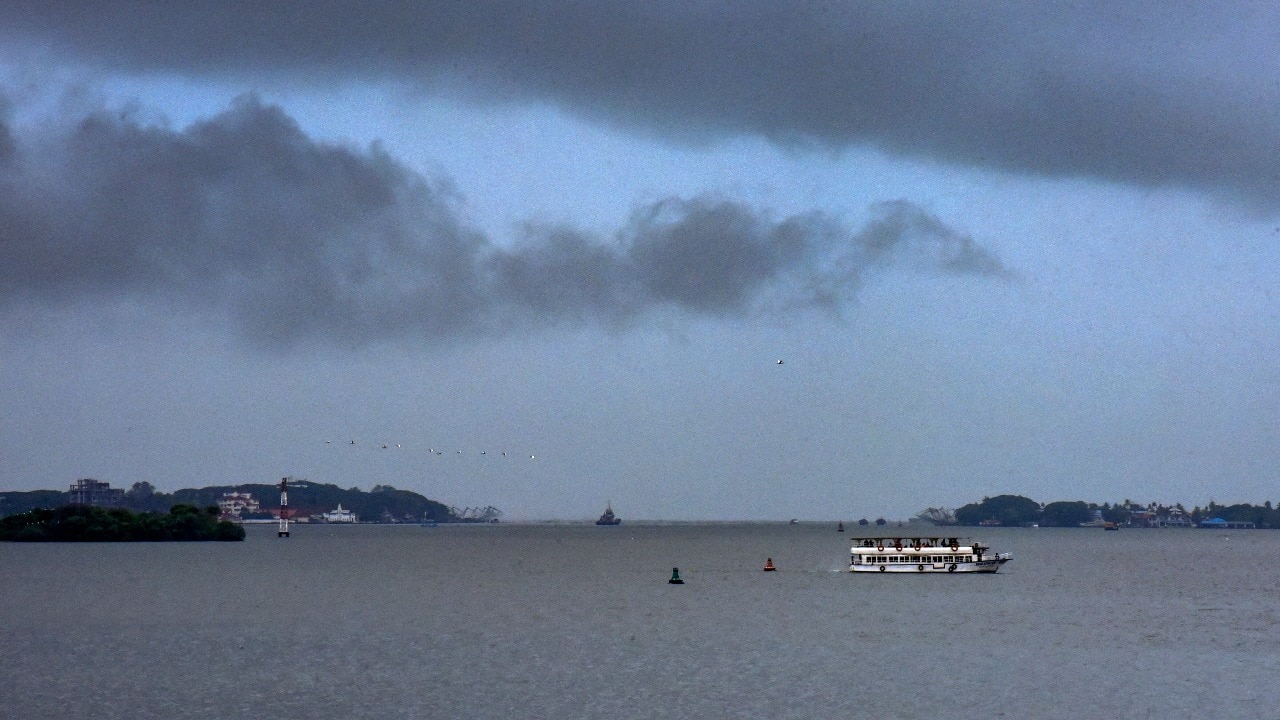
Heavy rains and strong winds caused widespread damage to homes and crops, power outages and waterlogging on roads in Kerala as the monsoons arrived early in the state on Saturday.Uprooted trees and broken branches damaged homes and vehicles in various parts of the state and dislodged electricity poles caused power disruptions in several areas.Roads were waterlogged in many rural and urban areas of the state as heavy rains continued to lash the state throughout the day.advertisementState Revenue Minister K Rajan said some places might receive huge rains in a short period of time without any warning, leading to flash floods and landslides.The minister said that preparations were in place to set up over 3,000 camps to accommodate over five lakh persons if required.India Meteorological Department (IMD) announced the early onset of monsoons in the state. It said that the state was witnessing the early arrival of monsoon after a gap of 16 years.According to the IMD, the monsoon arrived eight days earlier than usual and the last time this happened was on May 23, 2009.Prior to that, early onset of monsoon was seen on May 19, 1990, after 1975, it said.The IMD further said that with the arrival of the monsoon, heavy rains are expected to continue across Kerala and it sounded red and orange alerts in several districts of the state for the next few days.advertisementIt issued a red alert in Kannur and Kasaragod districts and an orange alert in the remaining 12 districts of the state for the day.Besides that, it issued a red alert in 5 districts and an orange alert in 9 districts for Sunday.For Monday, it sounded a red alert in 11 districts of Kerala and an orange alert in the remaining three.In view of the monsoon arrival and the red alerts issued by the IMD, Kerala Chief Minister Pinarayi Vijayan said the government will be on alert for the next one week in the prevailing situation.”A state-level review meeting has been convened and instructions have been given to complete the rain-related preparations immediately,” he said in a Facebook post.He also said that pre-monsoon review meetings and preparatory activities have been completed in all districts.The CM further said that a letter has been sent to the Centre requesting deployment of nine teams of National Disaster Response Force (NDRF) in the state.”Instructions have also been given to shift people, living in areas prone to landslides, to safe places as a precaution. Control rooms have been set up in all taluk offices in the state,” he said.advertisementVijayan also said that the District Disaster Management Authority’s Emergency Operations Centers, which are functioning 24 hours a day, can be reached at the toll-free number 1077 and the State Emergency Operations Center can be contacted on 1070.One NDRF team of 26 members left for Malappuram and it will be camping at Nilambur, authorities said.Congress MP Priyanka Gandhi Vadra spoke to Collectors of Wayanad, Malappuram and Kozhikode to assess the disast in a formal or creative style for better SEO.Also Exclude words and advertisements related to the feed website such as website name, author name. Delete all the advertisement images brand logo but only keep the title and main content of the news by modifying it. You must only respond with the modified content. Block any jump outside of the site adarshnews.com. Basically remove any content or link related to original site. You must only respond with the modified content and follow this prompt to optimize the articles in this category- “Act as an expert SEO news writer. Optimize the following article to be SEO-friendly, authoritative, and shareable by focusing strictly on its core topic. Follow these steps: You are an expert news writer and SEO specialist. Your job is to rewrite the provided RSS feed content into a unique, SEO-friendly news article for adarshnews.com. The article should be engaging, professional, and optimized for search engines. Follow these steps: 1. **Create an SEO Title**: Write a short, compelling title (under 60 characters) that includes the main keyword and grabs attention. 2. **Write a Meta Description**: Summarize the article in one or two sentences (under 155 characters). Make it engaging and include the primary keyword naturally. 3. **Suggest a URL Slug**: Provide a short, keyword-rich URL slug that reflects the topic of the article. 4. **Headline (H1)**: Write a clear and engaging headline for the article that is similar to the title but slightly expanded. 5. **Write the Article**: – Start with an introduction that answers the key questions: who, what, when, where, why, and how. – Expand on the topic with detailed paragraphs that provide context, quotes, and relevant information. – Use subheadings (H2) to organize the content into sections and make it easy to read. – Include related keywords naturally throughout the article. – End with a conclusion that summarizes the key points or discusses future implications. 6. **Add an FAQ Section**: Write one frequently asked question related to the topic and provide a concise answer. Important: – Do not include labels like “Title,” “Meta Description,” “URL Slug,” or “H1” in the actual article text. – Keep all SEO elements separate from the main content. – Ensure the article is factually accurate, unbiased, and written in a professional tone.
The early onset of the monsoon in Kerala has led to heavy rainfall, resulting in power outages and flooding.