**India and China Seek Resolution Amidst Eased Border Tensions**
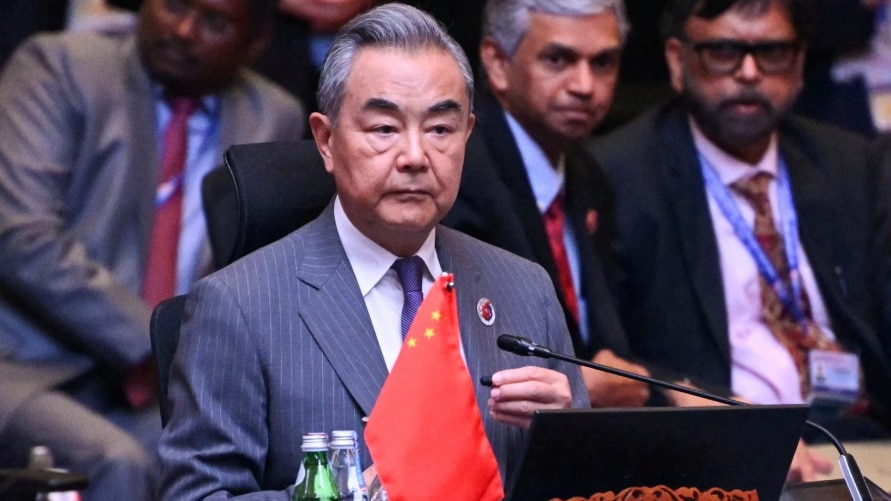
Chinese Foreign Minister Wang Yi has made a significant two-day visit to India, marking his first trip to the country since the 2020 Galwan Valley clash that severely strained India-China relations. This visit comes in the wake of trade tensions between India and the United States, particularly following the imposition of 25 percent tariffs by former US President Donald Trump.
Upon his arrival in Delhi, Wang engaged in discussions with India’s External Affairs Minister S. Jaishankar. The two leaders are set to participate in the 24th round of Special Representatives (SR) talks, which will also include National Security Advisor Ajit Doval. Following these talks, Wang is scheduled to meet with Prime Minister Narendra Modi.
This meeting is particularly timely, as border tensions between India and China have significantly decreased since the BRICS Summit held in Kazan, Russia, last year. The summit facilitated a pivotal meeting between PM Modi and Chinese President Xi Jinping, which helped to break the deadlock in their relations.
During his discussions with Wang, Jaishankar emphasized the importance of maintaining peace along the border as a prerequisite for improving bilateral ties. He acknowledged the challenges both nations have faced and stressed the need for a cooperative approach moving forward.
In a notable development prior to the Kazan BRICS Summit, India and China agreed to take steps to resolve the ongoing dispute in eastern Ladakh. Disengagement was successfully completed in areas such as Demchok and Depsang, with troop withdrawals from key disputed locations including Pangong, Galwan, Gogra, and Hot Springs. However, challenges remain regarding patrolling in these regions.
Following the Modi-Xi meeting on October 21 of last year, it was decided that further discussions would occur at the SR level to address the border dispute. The first of these meetings took place in Beijing in December, led by NSA Ajit Doval, with the upcoming session now set for Delhi.
Three key figures have played crucial roles in navigating the border dispute: PM Modi, who empowered the Indian Army to make swift decisions on the ground; Jaishankar, who has consistently raised the issue in international forums; and Doval, who has engaged in direct talks with Wang to facilitate SR-level discussions.
Throughout the dispute, the Indian Army demonstrated its resolve in eastern Ladakh, occupying strategic heights and deploying heavy weaponry, signaling to China that India is no longer the same nation it was in 1962. This assertive strategy compelled China to return to the negotiating table.
Since the Kazan summit, the situation along the Line of Actual Control (LAC) has remained stable, with both nations patrolling their respective territories. The upcoming SR meeting in Delhi is anticipated to further advance efforts toward a lasting resolution of the eastern Ladakh dispute.
**FAQ**
**What is the significance of Wang Yi’s visit to India?**
Wang Yi’s visit is significant as it marks a renewed effort to improve India-China relations following years of tension, particularly after the 2020 Galwan Valley clash. The discussions aim to address ongoing border disputes and enhance diplomatic ties between the two nations.