Bitcoin Magazine
Why Iran Wants Bitcoin For Safe Passage Though The Strait Of Hormuz
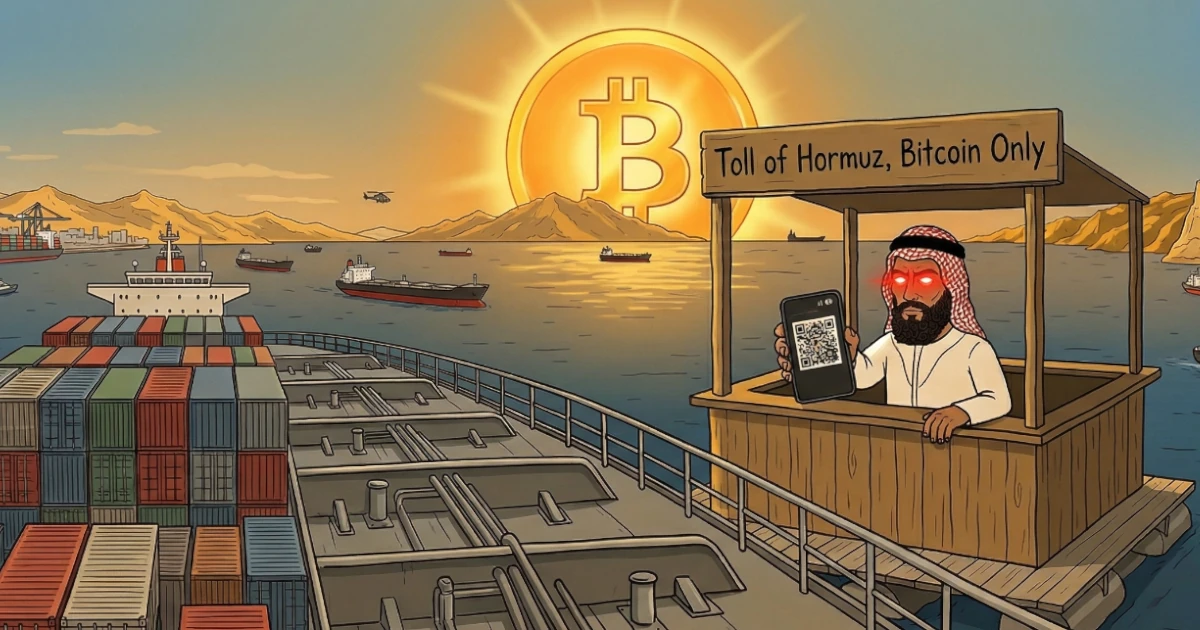
Iran’s grip over the Strait of Hormuz, one of the most important oil maritime transit choke points, remains firm. FT reported last week that Iran intends to charge a toll for passing, and Bitcoin was named the currency of choice. Here’s why this surprising turn of events has been predicted by Bitcoiners for over a decade.
On April 8, FT published a report titled “Iran demands crypto fees for ships passing Hormuz during ceasefire,” except it wasn’t crypto, it was Bitcoin. The report covered developments during the current two-week ceasefire in the war between the United States, Israel, and Iran, specifically over the Strait of Hormuz, which pre-war saw 20% of global oil flow through in tankers, supplying Europe, Asia, and much of the world. Iran as the article stated intents to charge a toll for ships to be allowed passage through Hormuz a key geographic choke point which Iran has tight control over via long range missles, underwater mines and attack drone technologies.
The report included an interview with Hamid Hosseini, a spokesperson for Iran’s Oil, Gas and Petrochemical Products Exporters’ Union, who told FT what oil vessels need to share inventory data with Iran and pay a $1 fee per barril of oil in Bitcoin to be allowed safe passate through Hormuz; “Once the email arrives and Iran completes its assessment, vessels are given a few seconds to pay in Bitcoin, ensuring they can’t be traced or confiscated due to sanctions.”
The report shook the Bitcoin community and made international news, as the Bitcoin price rose to $73,000 from the high 60’s. Iran’s choice to demand Bitcoin for safe passage instead of dollars, yuan, or gold is a profound recognition of Bitcoin’s superiority as money in the modern world. It validates decade-old theories by Bitcoiners that Bitcoin is money for enemies, fundamentally neutral, and thus ideal for international trade.The facts are clear. Iran does not want dollars because the United States has already placed incredibly heavy sanctions on it, cutting it off from Western payment rails. Iran does not want the Chinese currency either, as it would become dependent on yet another major power, giving up its sovereignty. Gold would need to be transported somehow, from the ships to Iran, complicating matters or settled via the banking system, resulting in the same sanction risk that fiat currencies pose. Tether gold is not an option either for the same reason: a trusted third party that can be sanctioned holds the shiny rocks; not even the most transparent and cryptographically authenticated “trust me, bro” technology can get around that fact.Only Bitcoin stands as a viable option to receive payment for a country at war like Iran, as the Bitcoin blockchain is an international network of highly interconnected nodes that resist censorship and thus sanctions by design, allowing quick and secure d