**Title:** Operation Sindoor: A Unified Military Response Against Terrorism
**Meta Description:** Operation Sindoor highlights a coordinated tri-services effort by India’s military to dismantle terror infrastructure in Pakistan and PoK.
**URL Slug:** operation-sindoor-tri-services-response
**Headline:** Operation Sindoor: India’s Tri-Services Strategy to Combat Terrorism
Operation Sindoor represents a meticulously coordinated response from India’s Army, Air Force, and Navy, aimed at dismantling terrorist infrastructure in Pakistan and Pakistan-occupied Kashmir (PoK). Launched on May 7, this operation was a direct response to the tragic Pahalgam attack that claimed 26 civilian lives on April 22.
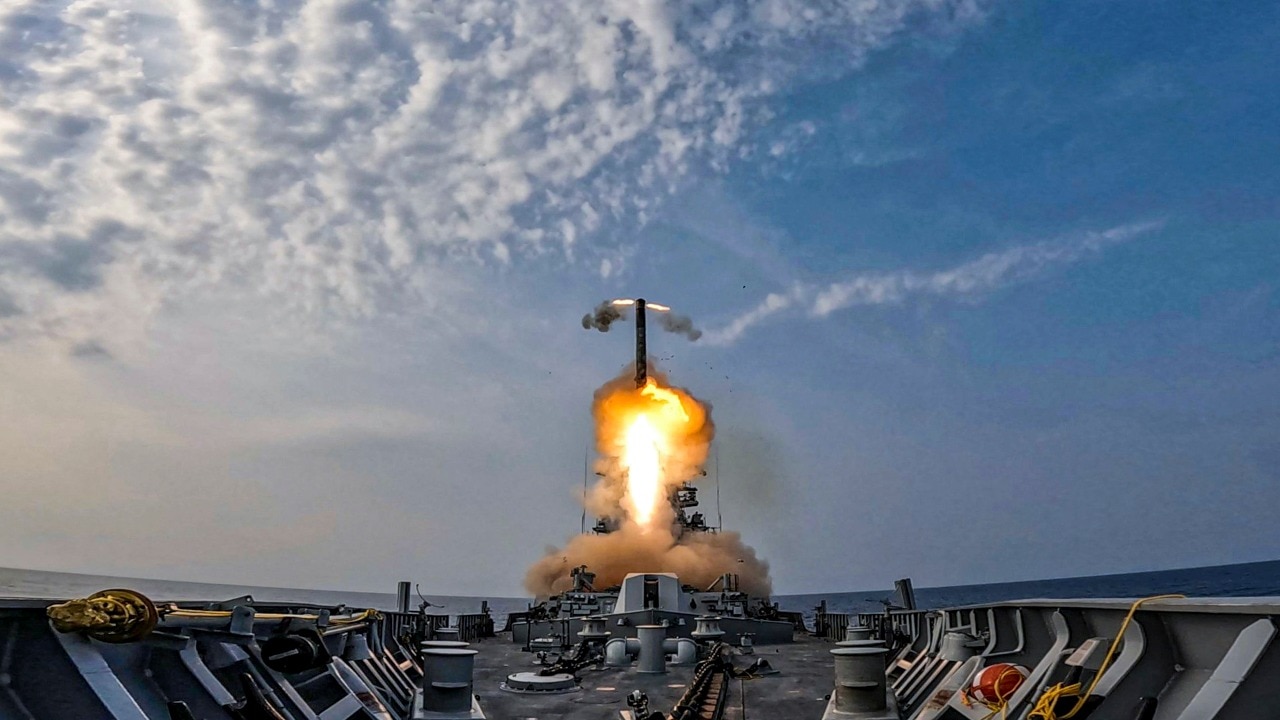
The government emphasized the collaborative efforts of the tri-services, particularly highlighting the Navy’s role as a “composite networked force.” The Navy’s Carrier Battle Group (CBG) played a crucial part by establishing a formidable air defense shield, effectively preventing hostile aerial incursions, especially from the Makaran coast in Balochistan, which lies between Pakistan and Iran.
Equipped with MiG-29K fighter jets and airborne early warning helicopters, the CBG conducted continuous sorties, ensuring that Pakistan had no operational space along the western seaboard. The Navy’s capability to maintain uncontested control over maritime areas validated its anti-missile and anti-aircraft defense systems in a complex threat environment.
Operation Sindoor was designed as a targeted campaign to disrupt terror networks across the Line of Control (LoC) and deeper into Pakistan. Vice Admiral AN Pramod stated that the Navy was fully prepared to strike specific targets both at sea and on land, including significant locations like Karachi. The forward deployment of naval forces compelled Pakistan to adopt a defensive posture, primarily remaining within harbors or close to the coast, which Indian forces monitored continuously.
The precision strikes executed during Operation Sindoor targeted nine terror sites, with four located in Pakistan and five in PoK. Notable targets included Bahawalpur, a stronghold of the Jaish-e-Mohammed, and Muridke, the headquarters of Lashkar-e-Taiba. The operation resulted in the elimination of over 100 terrorists, marking a significant achievement in India’s counter-terrorism efforts.
In conclusion, Operation Sindoor underscores the effectiveness of a unified military strategy in addressing terrorism. The collaboration among the Army, Air Force, and Navy not only demonstrates India’s commitment to national security but also sends a clear message to those who threaten peace and stability in the region.
**FAQ:**
**What was the main objective of Operation Sindoor?**
The primary objective of Operation Sindoor was to dismantle terrorist infrastructure across the Line of Control and within Pakistan, in response to the Pahalgam attack that resulted in civilian casualties.